


Inbound Logo
Web Development
Resources
Free audit
Free HubSpot Portal Audit
Get an instant audit of your HubSpot portal with actionable insights to improve CRM setup, automation, marketing, and overall performance.
Start Free Audit
button arrowbutton arrow
hubspot

How to Migrate from WordPress to HubSpot CMS (Without Losing Traffic)

time
12 MIN
date
March 18, 2026
How to Migrate from WordPress to HubSpot CMS (Without Losing Traffic)
In this article

WordPress to HubSpot CMS migrations are one of the most under-scoped projects in B2B SaaS. Teams see HubSpot CMS Hub as a drop-in WordPress replacement. It's not. It's a fundamentally different system with different data models, different CRM integration patterns, and different SEO implications.This guide covers realistic scope, the process that protects traffic, and where most teams underestimate complexity. Written for marketing leaders and RevOps heads planning the move.

Why WordPress to HubSpot Migrations Are Bigger Than You Think

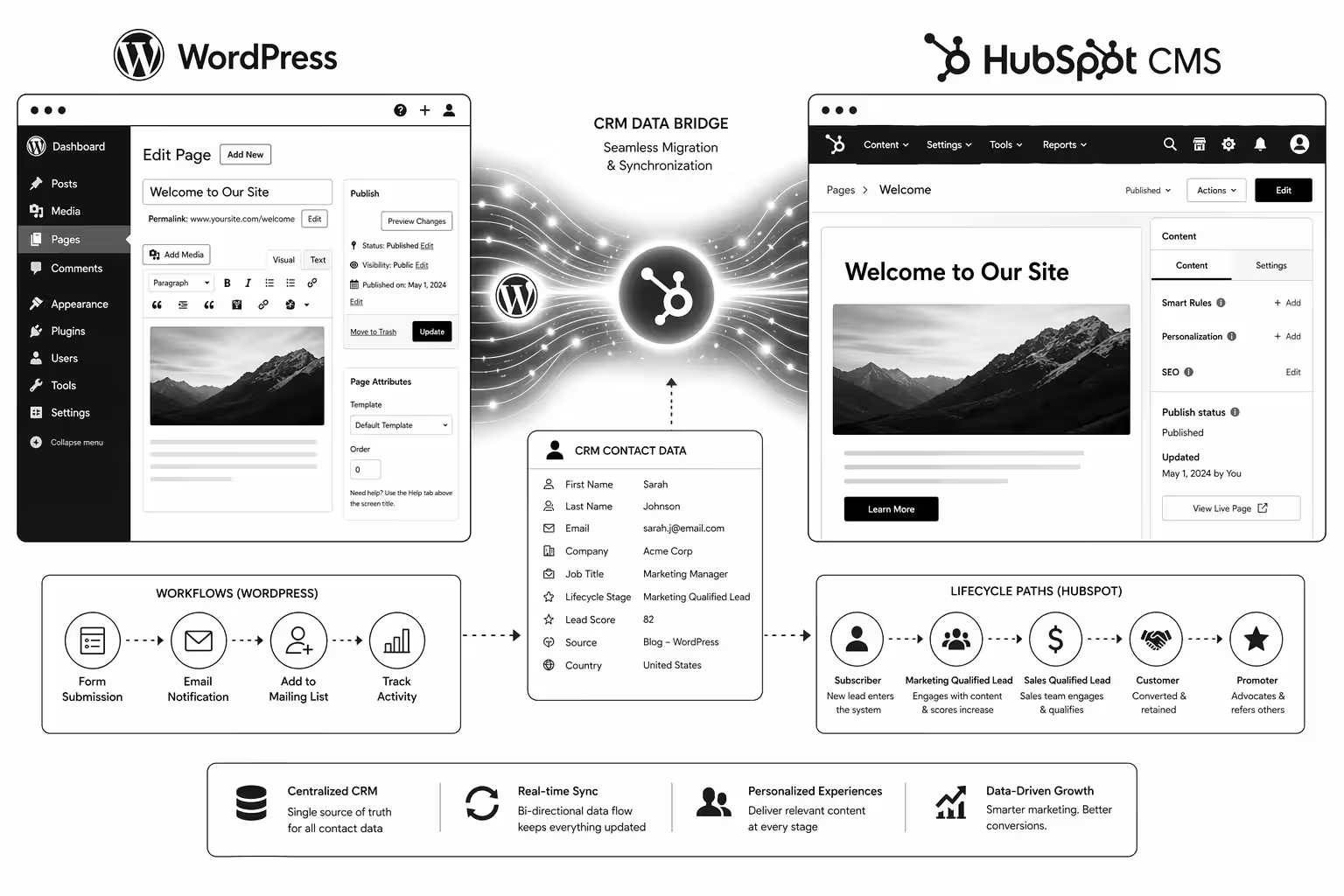
WordPress is a content-first platform. HubSpot is a CRM-first platform that happens to have a CMS. The difference matters for:

  • Data model. HubSpot requires properties, contact records, and lifecycle mapping. WordPress is content records + optional metadata.
  • Form architecture. WordPress forms go to an email or third-party service. HubSpot forms feed directly into CRM. This requires property mapping.
  • CMS scale. HubSpot CMS performs well up to 500–1000 CMS items. Beyond that, editing can feel slow.
  • URL structure. URL preservation is harder on HubSpot than Webflow because the CMS model is different.
  • Team workflow. WordPress teams often use plugins and custom workflows. HubSpot mandates a specific RevOps structure.

With planning, none of these are blockers. Without planning, they compound into a multi-quarter nightmare.

Pre-Migration: The Audit Phase (Weeks 1–3)

1. Content audit. How many pages? How many blog posts? Which pages drive traffic? Which rank for keywords? Export this to a spreadsheet.2. Current metadata audit. Export all meta titles, descriptions, and existing canonicals from WordPress. You'll need to reapply these in HubSpot.3. Form audit. How many forms do you have? What fields do they collect? Where do submissions go currently? This maps to HubSpot CRM property creation.4. Integration audit. What plugins/integrations does WordPress currently connect to? Which of these are critical? Which can be replaced by HubSpot native features?5. URL structure decision. Keep existing URL structure or restructure? URL changes cost SEO link equity. Only restructure if the benefit outweighs the cost.

Planning Phase: CRM Architecture (Weeks 4–6)

6. HubSpot property mapping. Every form field should map to a specific CRM property. Every contact data point should have a designated property. Document this before building anything in HubSpot.7. Lifecycle model alignment. Where do leads enter the funnel? Which contacts are qualified for what? This determines workflows, smart content, and reporting.8. HubDB schema design. Blog, case studies, integrations directory, team members — anything dynamic should use HubDB tables. Design the schema before building.9. 301 redirect strategy. URL mapping from old WordPress URLs to new HubSpot URLs. Use one-to-one redirects. Never redirect high-traffic pages to the homepage.
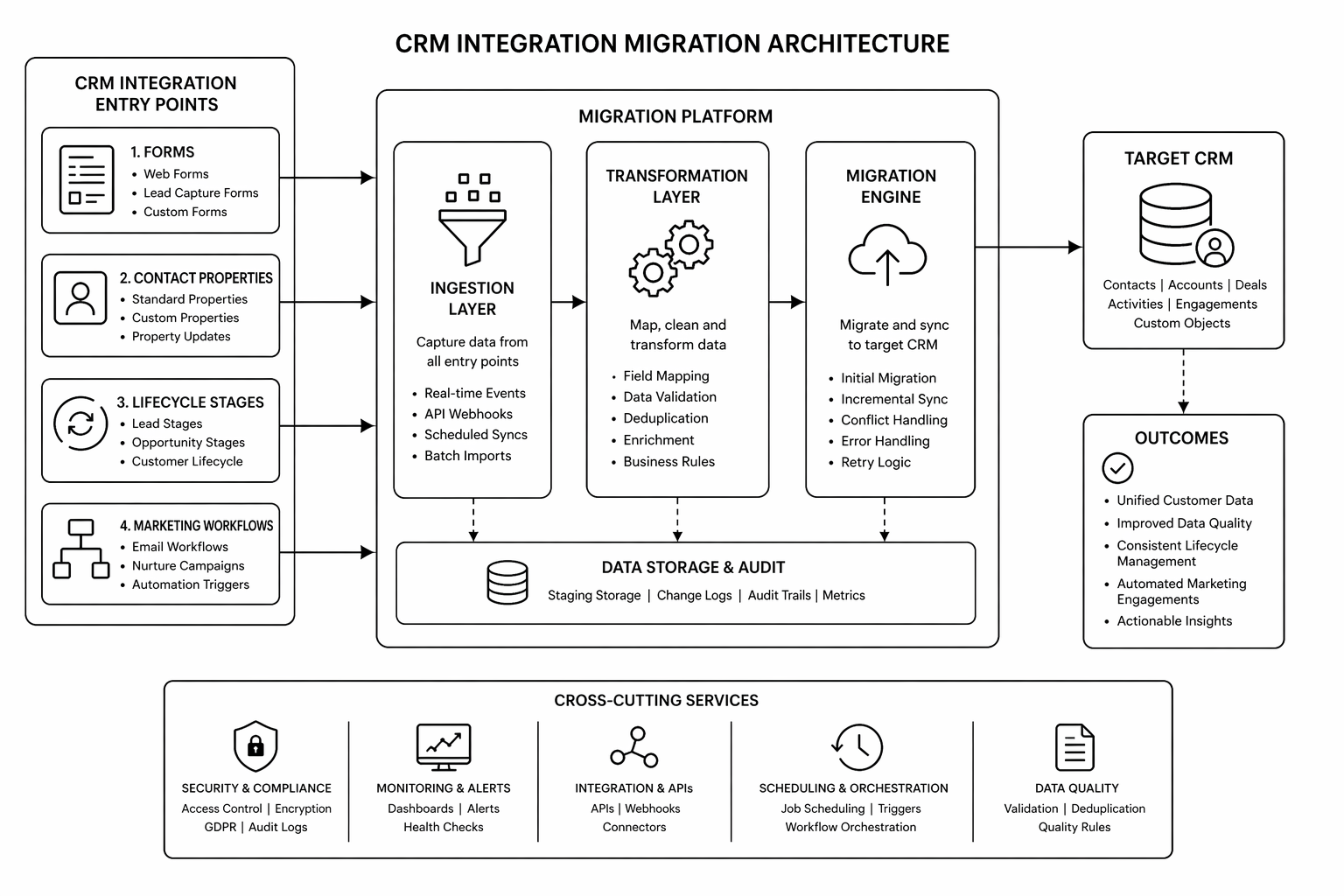
CRM Architecture

Build Phase: Implementation (Weeks 7–14)

10. HubSpot theme and modules. Build the design system and reusable modules first. All pages should use these — no bespoke one-off designs.11. Content migration. Import blog posts, pages, and assets. Use HubSpot's content import or manual migration depending on volume. Test thoroughly.12. Form and workflow setup. Build each form with correct property mapping. Set up workflows to fire on form submission. Test the full flow with real submissions.13. Smart content rules. Create lifecycle-aware content variations for key pages (homepage, pricing, key solutions).14. SEO technical setup. Meta titles and descriptions for every page. Schema markup. Canonical tags. Sitemap generation. Robots.txt configuration.

QA Phase: Pre-Launch Validation (Weeks 15–16)

15. Redirect testing. Spot-check 100+ old URLs. Verify they land on the correct new page with no chain redirects.16. Form submission testing. Every form should post contact data correctly to CRM and trigger intended workflows.17. Analytics and event mapping. GA4 event structure should match new page hierarchy. Test tracking on key conversion pages.18. Mobile and browser testing. All key pages on mobile, tablet, Chrome, Safari, Firefox, Edge.19. Lighthouse and Core Web Vitals. All green on key pages before launch.

Launch Phase (Week 17)

20. Pre-cutover. New Search Console property created, sitemap submitted, DNS cutover scheduled.21. DNS change. Point domain to HubSpot. Ideally Tuesday or Wednesday morning.22. Monitoring. First 48 hours: constant attention. Watch for crawl errors, 404s, traffic anomalies.

Post-Launch Phase (Weeks 18–24)

23. Traffic monitoring. Traffic dips are normal weeks 2–4. Recovery by 60–90 days is typical. If slower, audit redirects and technical setup.24. Ranking recovery. Pages should recover original rankings. If not, check for schema breaks, meta changes, or internal linking issues.25. CRM data quality. Audit form submissions for data anomalies or missing properties. Fix mapping issues.

Planning a WordPress to HubSpot migration? The right partner maps pre-move risk and locks architecture before building. Book a HubSpot migration audit.

Common Mistakes

1. Starting build before CRM architecture is locked. Three weeks into development, team realizes the property model is wrong. Rebuild required. Fix: spend extra time in planning phase.2. Misaligning URL structure. Team changes URLs for "cleaner paths" without redirect strategy. Traffic tank and link equity lost. Fix: preserve old URL structure whenever possible.3. Not testing forms before launch. Launch day, forms stop submitting. Sales team notices first. Fix: week of form testing in staging with real data.4. Underestimating content audit. 200 pages exists in WordPress. Team assumes it can be migrated in a day. Reality: 3 weeks of property mapping, form field alignment, and data cleanup. Fix: budget time accurately.5. Weak internal linking strategy. Pages migrated, but no updated internal linking. Blog never compounds. Fix: audit and update internal links during migration.Also compare with HubSpot CMS vs WordPress to confirm platform fit before you start.

FAQ

How long does WordPress to HubSpot migration take?

8–16 weeks depending on content volume, complexity of CRM data model, and integration dependencies. Most migrations sit at 12 weeks.

Will I lose traffic?

A 2–4 week dip is normal. With proper redirects and content parity, most sites recover within 60–90 days. Losses beyond 30% suggest a technical issue.

Can I keep WordPress for a while and migrate gradually?

You can run both systems in parallel for 2–4 weeks during launch to catch issues. Running indefinitely creates maintenance debt and confusion for visitors.

Do I need a HubSpot-certified partner?

Not essential, but helpful. HubSpot-specialized teams understand HubDB schema design, property mapping, and workflow architecture faster than generalists.

What if my current WordPress URLs have lots of backlinks?

Preserve URLs through 301 redirects. The backlinks stay valuable when the URL redirects correctly to the topically similar new page.

Conclusion: Migration Success Requires Process, Not Heroics

WordPress to HubSpot migrations fail when teams skip planning or underestimate scope. They succeed when the team spends the first third of the project on architecture and redirect planning, not on building.Use this framework. Your margins on the project depend on it.Need guidance through the process? Our HubSpot development team has migrated 30+ B2B SaaS sites. Book your migration audit.

 The WordPress to HubSpot Migration Playbook — a detailed roadmap covering architecture decisions, CRM schema design, and launch monitoring.

KEEP BUILDING
title arrow

You've got the plan. Let's build it.

We turn the frameworks you just read into the flows, pages, and automation behind them — under your brand, always.

Keep reading

View all articles
button arrowbutton arrow
HubSpot Custom Modules and Themes: A Developer Deep Dive
hubspot

HubSpot Custom Modules and Themes: A Developer Deep Dive

HubSpot Custom Modules and Themes in 2026 is won by execution quality, not platform hype. Teams that perform consistently align strategy, implementation, and measurement into one operating system. This guide gives the practical framework, internal link map, and optimization cadence to do that.HubSpot's drag-and-drop power lives in custom modules. Here's the developer-grade approach the best CMS sites use. If you want implementation help, work with HubSpot CMS team. For connected strategy, also review Hubspot Website Design Playbook and Hubspot Development Agency.

What HubSpot Custom Modules and Themes Means in Practice

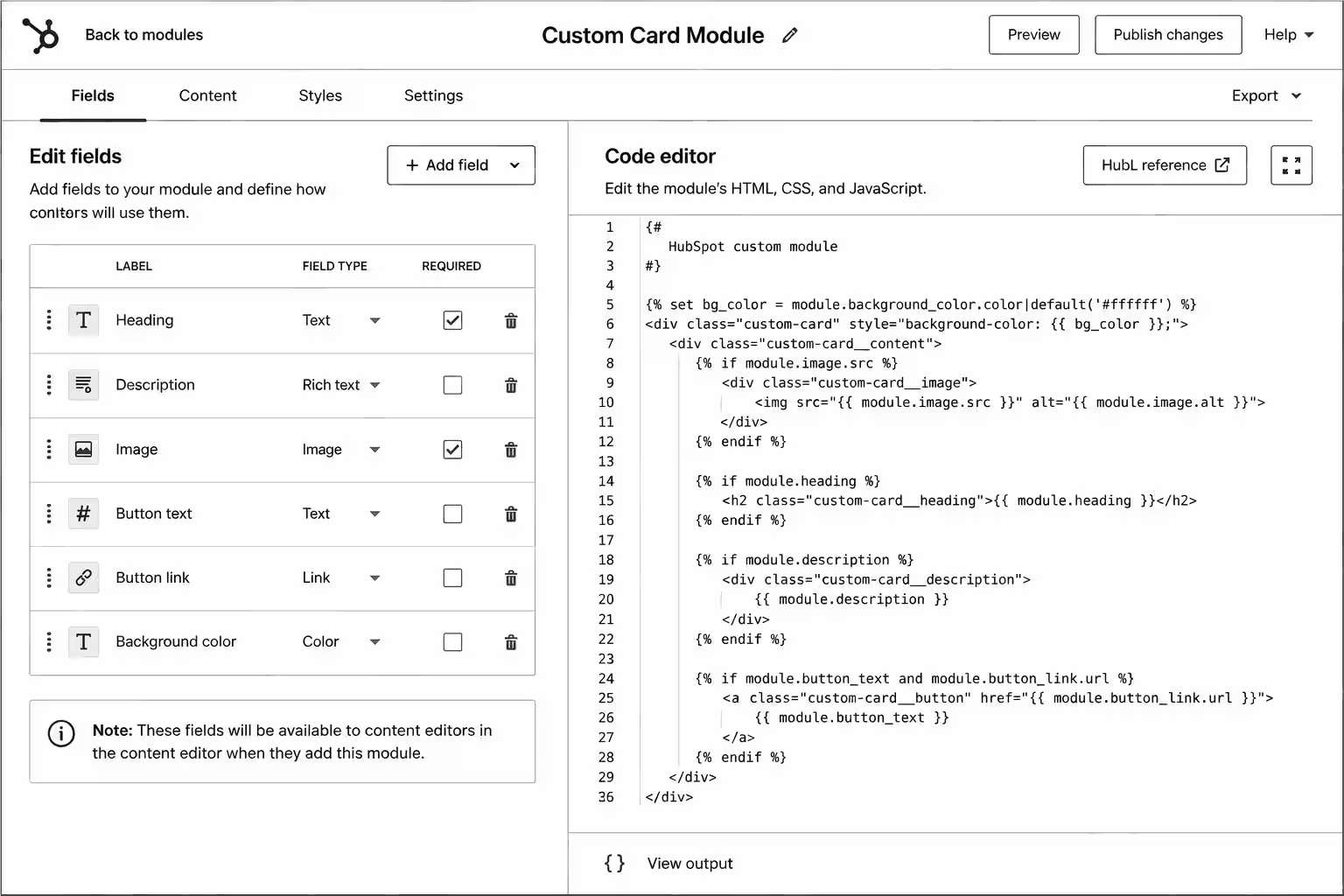
HubSpot custom modules are reusable building blocks that let marketing teams ship fast without breaking design systems. In 2026, module strategy is a conversion and governance decision, not just a developer preference.

Why hubspot custom modules Matters in 2026

1. High-velocity teams need modular systems, not one-off page builds.2. HubL and theme structure directly influence performance and editor reliability.3. Reusable modules reduce QA overhead because patterns are tested once and reused.

Step-by-Step Playbook

1. Design module taxonomy

Define global, section, and page-level modules before coding.

2. Set strict field rules

Use defaults, naming standards, and validation for editor safety.

3. Sync design tokens

Align typography, spacing, and colors into reusable standards.

4. Add performance guardrails

Keep module JS lean and optimize media loading.

5. Publish editor playbook

Document how and when each module should be used.Mid-article CTA -> Need support applying this to your stack? HubSpot dev consultation and get a scoped roadmap with timeline, owners, and KPI targets.

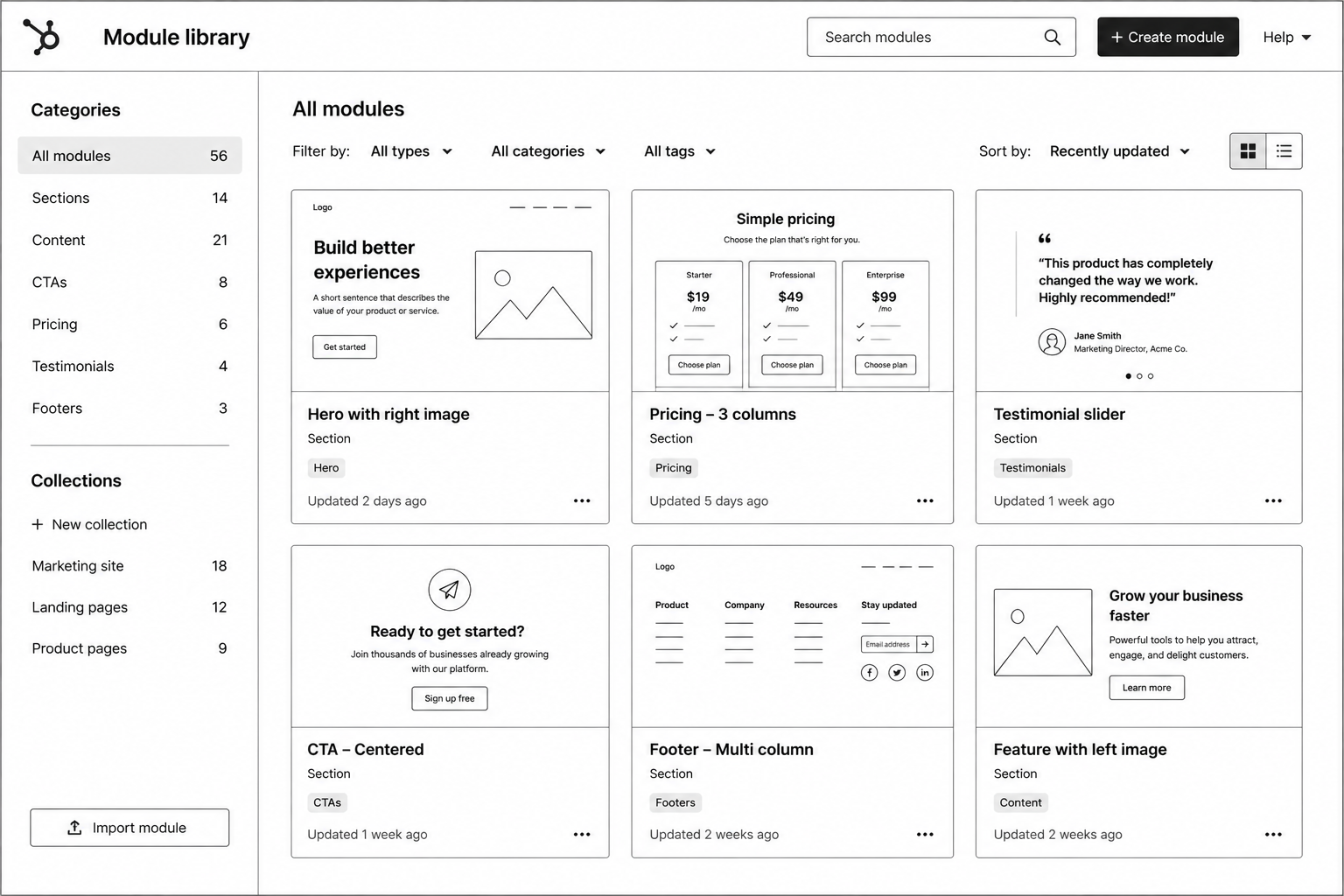
Module library

Tools, References, and Benchmarks

  • HubSpot CLI workflow
  • Module naming standard
  • Editor QA checklist
  • Semantic keyword targets to distribute naturally: hubspot theme development, hubspot custom module tutorial, hubspot hubl

Use these references during planning and QA: HubSpot Knowledge Base, HubSpot developer docs, and Salesforce product documentation.

Common Mistakes That Kill Performance

  • Building near-duplicate modules
  • Ambiguous field labels
  • No module governance for future editors

FAQ - HubSpot Custom Modules and Themes

How long does a hubspot custom modules project usually take?

Most teams can ship an initial version in 4 to 8 weeks, then improve outcomes over one quarter with a weekly optimization cadence.

Is hubspot custom modules relevant for UK and US teams?

Yes. The core framework is consistent across both markets. Differences are usually compliance details, buying behavior, and GBP/USD planning.

What should we measure first for hubspot custom modules?

Track one leading metric, one conversion metric, and one revenue metric so execution stays tied to business impact.

Should we run this in-house or with a specialist partner?

If your team has deep expertise and bandwidth, in-house can work. If speed and risk control matter, working with a specialist partner is usually faster.

What is the most common failure mode?

Teams skip governance after launch. Data quality drifts, process quality declines, and performance plateaus. A simple weekly operating rhythm prevents this.

Conclusion

HubSpot Custom Modules and Themes performs best when execution decisions are tied to measurable outcomes from day one. Use this playbook to prioritize what matters, reduce risk, and create a repeatable optimization rhythm.Want a specialist team to accelerate delivery? Talk to HubSpot CMS team or book a consultation and we will map a practical rollout plan.Download the HubSpot Custom Module Starter Kit to implement this framework with templates and checklists.

HubSpot Custom Development Toolkit — module requirements document, HubSpot theme architecture guide, reusable component planner, developer handoff template, QA framework, and optimization checklist to create scalable HubSpot CMS experiences.

HubSpot vs Salesforce: Honest 2026 Comparison for Growing Teams
hubspot

HubSpot vs Salesforce: Honest 2026 Comparison for Growing Teams

HubSpot vs Salesforce: Honest 2026 Comparison for Growing Teams

HubSpot vs Salesforce in 2026 is won by execution quality, not platform hype. Teams that perform consistently align strategy, implementation, and measurement into one operating system. This guide gives the practical framework, internal link map, and optimization cadence to do that.HubSpot vs Salesforce isn't decided by feature lists anymore. Here's how to choose based on your actual stage. If you want implementation help, work with HubSpot development services. For connected strategy, also review Hubspot CRM Implementation and Hubspot Website Design Playbook.

What HubSpot vs Salesforce Means in Practice

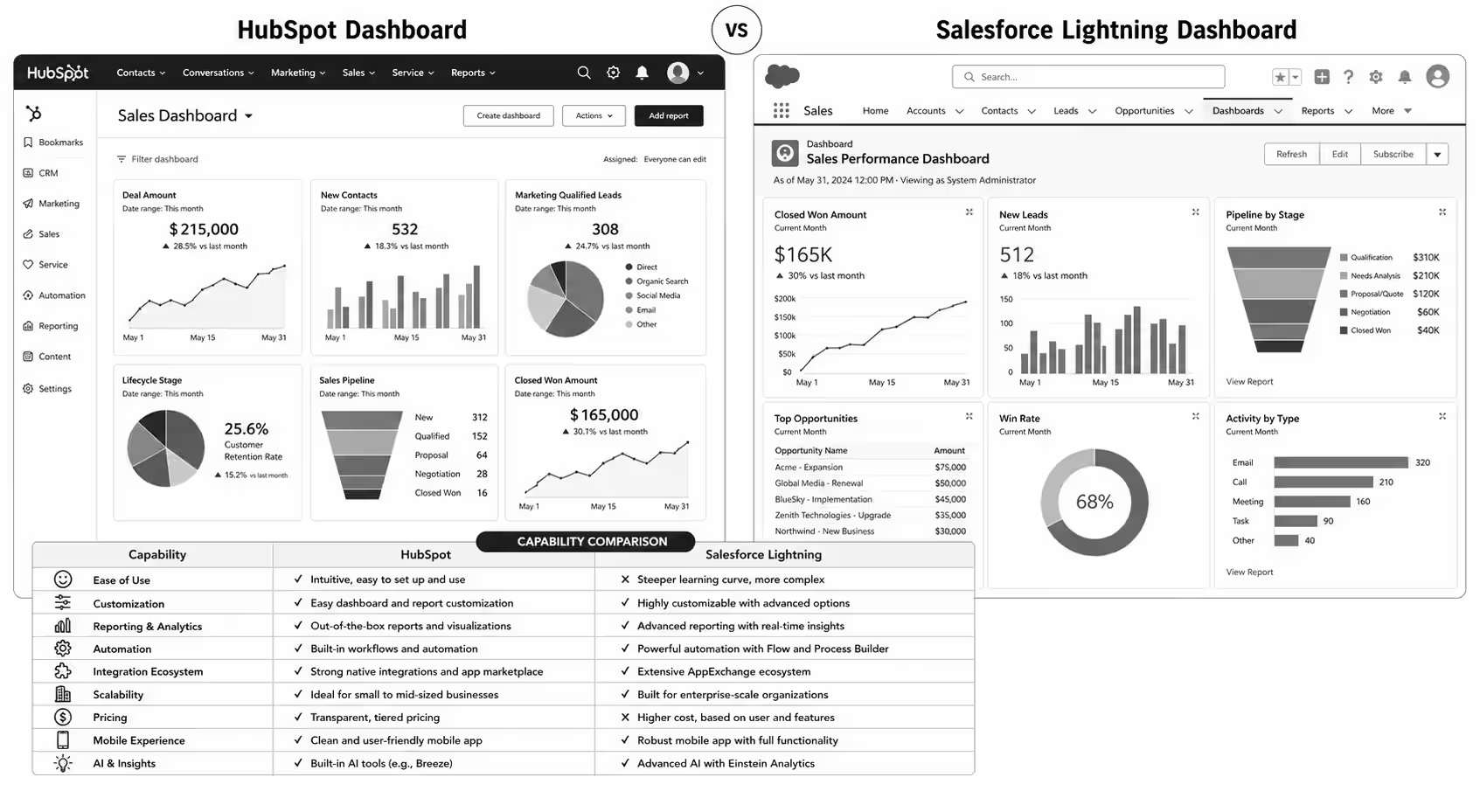
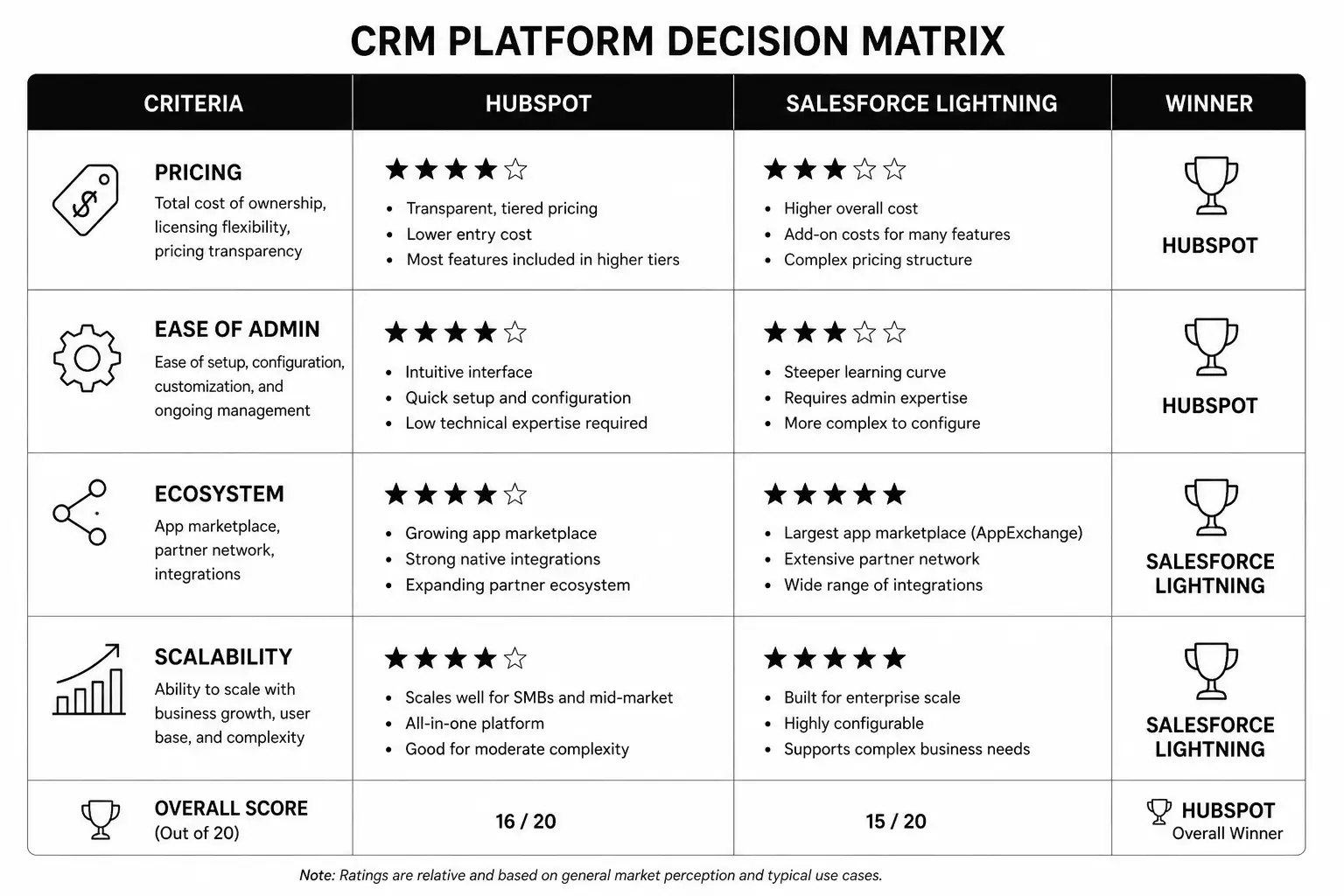
HubSpot vs Salesforce is a fit decision, not a feature checklist. HubSpot usually wins on speed and lower admin overhead; Salesforce usually wins when you need highly custom objects and enterprise governance from day one.

Why hubspot vs salesforce Matters in 2026

1. Total cost is often misjudged when teams compare list price but ignore admin and integration load.2. AI assistants now exist in both platforms, so data model quality matters more than logos.3. RevOps teams are measured on forecast quality, so CRM fit now affects board-level reporting.

Step-by-Step Playbook

1. Map GTM complexity

Score pipeline complexity, product lines, territories, and approval layers.

2. Model 3-year cost

Include licenses, admin headcount, consultant support, and migration cost.

3. Validate live workflows

Test lead routing and renewals in sandbox before committing.

4. Score reporting fit

Confirm dashboards can be built without spreadsheet patchwork.

5. Choose with weighted criteria

Use a scorecard so internal politics do not override evidence.Mid-article CTA -> Need support applying this to your stack? HubSpot vs Salesforce advice and get a scoped roadmap with timeline, owners, and KPI targets.

Tools, References, and Benchmarks

  • CRM weighted scorecard
  • TCO calculator (GBP and USD)
  • Sandbox evaluation checklist
  • Semantic keyword targets to distribute naturally: hubspot or salesforce, hubspot vs salesforce pricing, salesforce alternative

Use these references during planning and QA: HubSpot Knowledge Base, HubSpot developer docs, and Salesforce product documentation.

Common Mistakes That Kill Performance

  • Choosing based on brand familiarity
  • Ignoring admin staffing needs
  • Skipping migration risk planning

FAQ - HubSpot vs Salesforce

How long does a hubspot vs salesforce project usually take?

Most teams can ship an initial version in 4 to 8 weeks, then improve outcomes over one quarter with a weekly optimization cadence.

Is hubspot vs salesforce relevant for UK and US teams?

Yes. The core framework is consistent across both markets. Differences are usually compliance details, buying behavior, and GBP/USD planning.

What should we measure first for hubspot vs salesforce?

Track one leading metric, one conversion metric, and one revenue metric so execution stays tied to business impact.

Should we run this in-house or with a specialist partner?

If your team has deep expertise and bandwidth, in-house can work. If speed and risk control matter, working with a specialist partner is usually faster.

What is the most common failure mode?

Teams skip governance after launch. Data quality drifts, process quality declines, and performance plateaus. A simple weekly operating rhythm prevents this.

Conclusion

HubSpot vs Salesforce performs best when execution decisions are tied to measurable outcomes from day one. Use this playbook to prioritize what matters, reduce risk, and create a repeatable optimization rhythm.Want a specialist team to accelerate delivery? Talk to HubSpot development services or book a consultation and we will map a practical rollout plan.Download the CRM Selection Scorecard to implement this framework with templates and checklists.

HubSpot vs Salesforce Comparison Toolkit — CRM feature scorecard, business requirements worksheet, cost calculator, automation comparison guide, reporting checklist, and implementation roadmap to confidently select the best CRM for your business.

HubSpot CRM Implementation Guide: 90-Day Rollout for B2B Companies
hubspot

HubSpot CRM Implementation Guide: 90-Day Rollout for B2B Companies

HubSpot CRM Implementation Guide: 90-Day Rollout for B2B Companies

HubSpot is the easy CRM to start using and one of the harder CRMs to implement well. The product is designed to be turn-key — and that's precisely why most rollouts stall. Teams import a contact list, configure a couple of pipelines, and call it live. Six months later, sales is back in spreadsheets and marketing has lost track of which leads are real.This HubSpot CRM implementation guide is the 90-day rollout plan our HubSpot development team runs for B2B companies between 10 and 250 employees. It covers data model, migration, automation, reporting, and the adoption playbook that decides whether the CRM lasts past month four.If you're still deciding between HubSpot and Salesforce, read the HubSpot vs Salesforce comparison first.

What HubSpot CRM Implementation Actually Means

Implementation is more than a setup checklist. A real HubSpot CRM implementation is a structured project that aligns four things: your data model, your sales process, your marketing automation, and your team's daily behaviour. Each one is solvable; the integration of all four is where most projects fail.A successful rollout produces:

  • A clean, deduplicated database with consistent property naming
  • Pipelines that match how your team actually sells
  • Automation that does the busywork without breaking edge cases
  • Reports that surface the metrics leadership actually checks
  • Adoption from sales, marketing, and CS without daily friction

Why HubSpot CRM Implementation Matters in 2026

Three forces make 2026 the year to do this properly.1. HubSpot's AI features only work on clean data. Breeze (HubSpot's AI suite) summarises deals, scores leads, and drafts outreach. Garbage data in, garbage AI out. The teams getting real value from Breeze in 2026 are the ones who fixed their data model first.2. RevOps is now a board-level conversation. Pipeline visibility, attribution, and forecast accuracy are CFO concerns. A messy CRM costs you in meetings, not just operations.3. Sales-led + product-led hybrids need real CRM rigor. If your B2B motion blends inbound, outbound, and product-qualified leads, your CRM needs to track all three cleanly — and most don't.

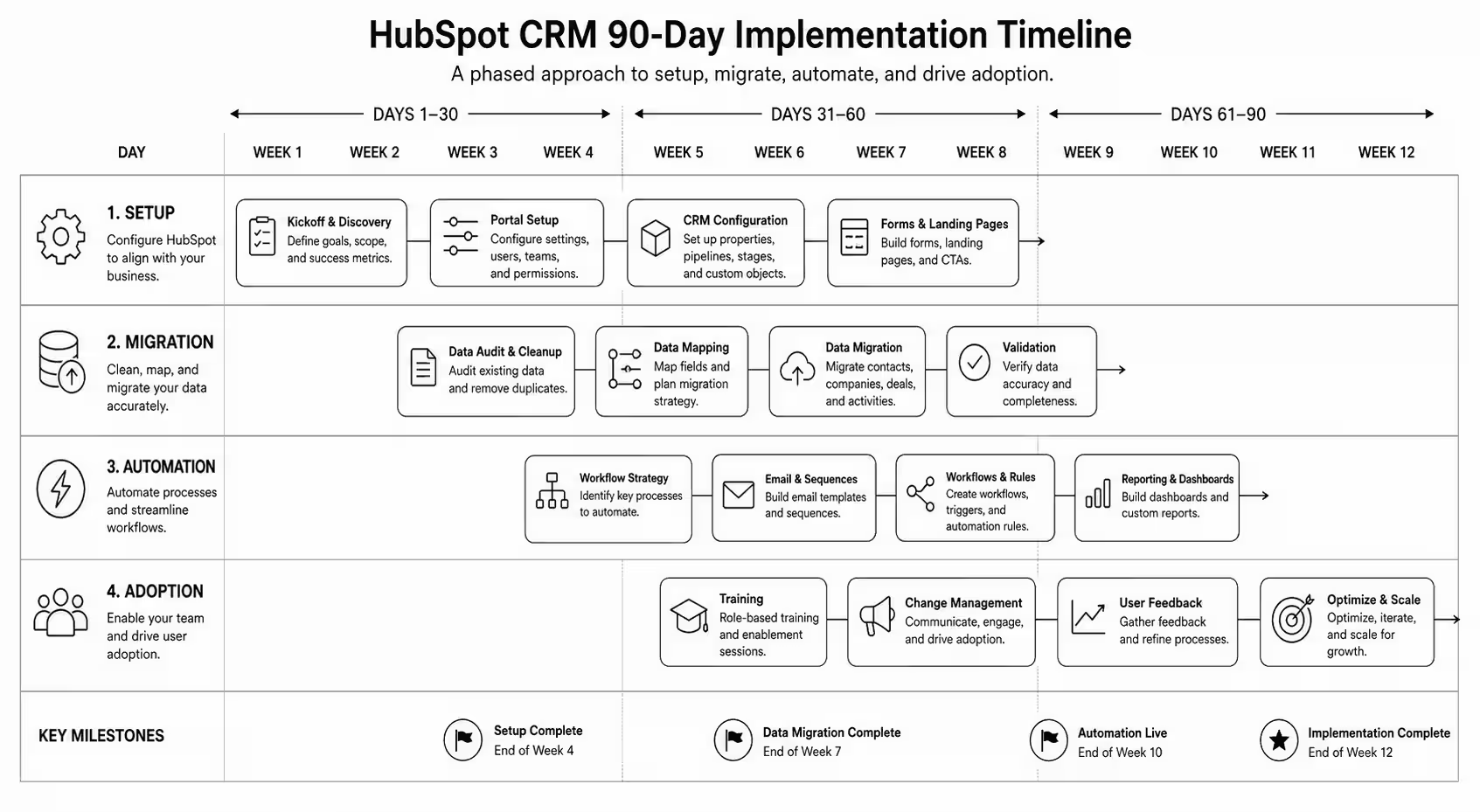
How a 90-Day HubSpot CRM Rollout Works

The rollout splits into three 30-day phases: foundation, automation, and adoption. Most failed rollouts skip phase one and rush to phase two — automating broken processes makes them worse, not better.

Days 1–30: Foundation

  • Stakeholder mapping. Identify the daily users (SDRs, AEs, marketing, CS) and the data consumers (leadership, finance).
  • Data model design. Define properties on Companies, Contacts, Deals, Tickets. Document property purpose, type, and ownership.
  • Pipeline architecture. Design pipelines and stages around your actual sales process — not HubSpot's defaults.
  • Lifecycle stages. Define what each stage means (Lead → MQL → SQL → Opportunity → Customer) and the criteria for transitions.
  • Migration plan. If migrating from another CRM, map fields, owners, and history. Plan deduplication.
  • User permissions. Set up teams, roles, and access. Default settings expose too much.

Days 31–60: Automation

  • Workflows for lifecycle transitions. Automatic stage updates based on behaviour, not just manual changes.
  • Lead routing. Round-robin, territory-based, or AE-of-the-month — whatever matches your model.
  • Lead scoring. Start simple (rules-based), graduate to predictive once you have data. See AI lead scoring guide.
  • Email sequences and templates. Library of approved outbound and follow-up templates per persona.
  • Task automation. Auto-create follow-up tasks at stage transitions; auto-create check-ins for stalled deals.
  • Integration setup. Connect tools that feed CRM data — calendar, email, calling, Slack, your CMS, your product analytics.

Days 61–90: Adoption

  • Training by role. SDRs, AEs, marketing, and CS each need different training. Generic onboarding fails.
  • Reporting and dashboards. Build the 5–8 dashboards leadership will actually check weekly. Cull the rest.
  • Daily standup integration. Make CRM the source of truth for the metrics discussed in standup.
  • Hygiene rituals. Weekly deal review, monthly data audit. Without these, the CRM degrades within 90 days.
  • Manager enablement. Sales managers must run reviews from HubSpot, not from spreadsheets. Otherwise reps never trust the system.
  • Iteration cadence. Quarterly review of properties, workflows, and reports. Prune, don't accumulate.

Mid-article CTA → Need a HubSpot specialist to run the 90 days for you? Book a HubSpot CRM rollout call and we'll scope the project in 30 minutes.

Step-by-Step: The Foundation Phase in Detail

1. Audit your current state

Before you touch HubSpot: document the existing process. What CRM (or spreadsheet) is being used? What pipelines exist? What reports run? Where does data leak?

2. Design the data model on paper

List every property your team needs on each object. Group them: identification (name, email), firmographic (company size, industry), behavioural (last visit, last email open), commercial (deal value, close date), operational (owner, source, status).

3. Set up the HubSpot account properly

  • Configure currency (multi-currency if you sell across UK/USA)
  • Set timezone, fiscal year
  • Create teams matching your org structure
  • Set up users with appropriate permissions
  • Configure the master Brand Kit (logo, colors) for templates

4. Create custom properties before importing data

If you import first and add properties later, you'll have inconsistent data. Property-first, then import.

5. Build pipelines and stages

For sales: typical 5–7 stages from Connected to Closed Won/Lost. For CS: separate pipeline for renewals and expansions. For support: ticket pipeline with priority and SLA.

6. Configure lifecycle stages and lead status

Define the criteria. Document them. Make them automatic where possible (workflows that move contacts from Lead to MQL based on score thresholds).

7. Migrate data with a clean import file

Dedupe, standardise (capitalisation, country codes, phone formats), map owners, validate emails. Import companies first, then contacts, then deals.

8. Validate

Spot-check 50 records across all object types. Confirm associations, property values, and ownership. Fix the data model before automating on top of it.

Hubspot adoption dashboard

Best Tools for HubSpot CRM Implementation

  • HubSpot Operations Hub — for data quality, sync, and custom-coded actions. Worth the upgrade for >100-employee implementations.
  • Insycle — bulk data cleansing and dedup. Saves weeks on migration projects.
  • HubSpot's Migration IQ — for Salesforce-to-HubSpot migrations specifically.
  • Reveal or Crossbeam — partner-data overlay. Rich for B2B account expansion.
  • Default Tasks app — for automated task creation at stage transitions.
  • Looker Studio + HubSpot connector — for cross-tool reporting (HubSpot + product + ad spend).

Common HubSpot Implementation Mistakes

  • Importing data before designing properties. The single most common failure mode. Inconsistent data is hard to clean later.
  • Copying competitor pipelines. Your sales process isn't theirs. Design for how your team actually sells.
  • Over-automating early. Rules nobody understands break in production. Start with manual processes, automate once you've seen the edge cases.
  • Skipping training. A perfect CRM with no adoption is worse than a clunky one used daily.
  • No data hygiene rituals. Without weekly hygiene, the CRM degrades quickly.
  • Treating Marketing Hub and Sales Hub as separate projects. They share data — implement them together.
  • Ignoring HubSpot AI from day one. Breeze is genuinely useful when configured early. See marketing AI guide.

FAQ — HubSpot CRM Implementation

How long does HubSpot CRM implementation take?

For B2B companies under 250 employees, 90 days is a realistic full rollout including foundation, automation, and adoption. Larger orgs or complex Salesforce migrations can take 6 months.

How much does HubSpot CRM implementation cost?

Platform costs vary by hub and seat count (typically $2k–$15k/mo for mid-market). Implementation services from a HubSpot partner agency typically run $15k–$80k depending on complexity. Worth pricing properly — bad implementations are expensive to redo.

Should I hire a HubSpot partner agency or do it in-house?

If RevOps is a permanent function in your org, hire in-house long-term but use a partner for the rollout. If RevOps is a one-time project, partner-led is cleaner. See the HubSpot agency selection guide.

Can I use HubSpot CRM for free?

Yes — HubSpot's free CRM is genuinely capable. The free tier holds for <50-person teams with simple pipelines. Past that, paid hubs unlock the automation and reporting needed for serious RevOps.

Does HubSpot replace Salesforce?

For most B2B companies under 500 employees, yes. Above that, the answer depends on data complexity, ecosystem dependencies, and admin overhead tolerance. See the HubSpot vs Salesforce comparison.

How do I get my sales team to actually use HubSpot?

Three levers: make it easier than the alternative (mobile + Gmail/Outlook integration), make manager reviews run from it, and tie compensation visibility to it. The first 60 days of behavioural reinforcement decide adoption.

Conclusion: Implementation Is Where HubSpot ROI Is Won or Lost

HubSpot is one of the best CRMs for B2B companies — but only if implementation is done with the same rigor you'd apply to any other system that runs your revenue operations. The 90-day plan above isn't aggressive; it's the realistic baseline for a rollout that sticks.Our HubSpot development team has run CRM implementations for B2B SaaS, professional services, and ecommerce brands across the UK and USA. Book a HubSpot rollout call and we'll scope your 90-day plan in 30 minutes.Download the HubSpot 90-Day Implementation Plan — the exact roadmap and checklist we run for clients.

HubSpot CRM 90-Day Implementation Blueprint — CRM audit checklist, implementation roadmap, pipeline configuration guide, workflow automation planner, team training checklist, and KPI dashboard to build a scalable HubSpot CRM system.