


Inbound Logo
Web Development
Resources
Free audit
Free HubSpot Portal Audit
Get an instant audit of your HubSpot portal with actionable insights to improve CRM setup, automation, marketing, and overall performance.
Start Free Audit
button arrowbutton arrow
AI Automation

How to Automate Your Marketing Stack with AI (Without Breaking It)

time
12 MIN
date
March 13, 2026
How to Automate Your Marketing Stack with AI (Without Breaking It)
In this article

Most teams trying to add AI to their marketing stack approach it wrong. They pick a flashy AI tool, wire it into their CRM, and six weeks later they're debugging garbage data and asking "how did this happen?"This guide covers the safe way to add AI to marketing operations. Tools that work. Workflows that don't break. Guardrails that protect data quality. How to systematically automate without turning your CRM into a data swamp.

The Marketing Stack Automation Layers

Layer 1: Workflow Automation (Zapier, Make, n8n) — Traditional automation without AI. Trigger + action. Works well for deterministic tasks.Layer 2: AI Enrichment (Claude, GPT sitting in a workflow) — Add an LLM step to classify, extract, or enrich. "Classify this email into 5 bucket types" or "Extract company name and industry from this text."Layer 3: AI Agents (Supervised agentic workflows) — More autonomy but still constrained. "Research this prospect across these three sources and return structured output."Layer 4: Multi-Agent Systems — Multiple agents collaborating. Still mostly experimental in production. Skip this unless you're brave.Most teams should stay in Layer 2 (AI enrichment) for 6–12 months before considering Layer 3.

Five High-ROI Automation Workflows (Safe to Build)

1. Lead enrichment on form submission. Form fills, n8n workflow triggers, Claude extracts company size/industry/decision level. Write to HubSpot properties. Data quality improves, sales team gets context. Low risk, high value.2. Email content classification for routing. Incoming email → LLM classifies as "complaint," "feature request," "implementation question." Route to appropriate team queue. Reduces manual sorting. Very safe.3. Meeting notes into CRM summary. Zoom transcript → Claude summarises into next steps, action items, decision points. Posts to CRM deal record. Sales team saves 15 minutes per meeting. Safe and high-ROI.4. Lead scoring based on engagement signals + firmographic data. Combine CRM activity (email opens, page visits, form fills) + company data (industry, size, growth rate) to score leads. More accurate than rule-based scoring. Medium complexity, high value.5. Predictive churn scoring for accounts. Combine NPS scores + support ticket volume + usage metrics to identify at-risk accounts. Trigger customer success action. Most impactful workflow long-term. Requires 2–3 months baseline data before it works well.

The Guardrails Framework

Before every AI automation goes live, require:

  • 1. Input validation. What happens if bad data enters the workflow? Add pre-checks: "Is email a valid format? Is company name non-empty?" Garbage in = garbage out prevents.
  • 2. Output validation. AI returns weird results sometimes. Add validation: "Does this output match expected schema? Is it in range?" Reject bad outputs, not passthrough.
  • 3. Error handling. AI fails sometimes (API down, rate limit, weird input). Add fallback: "If AI fails, mark for manual review." Never silently break.
  • 4. Observability and logging. Log every AI call: input, output, decision made. When something breaks, you need audit trail.
  • 5. Human-in-the-loop for first 100 records. First records go to Slack for manual review, not directly to CRM. Catch issues before scale.
  • 6. Data access controls. Who can see AI-generated enrichment? Does it contain PII? Handle accordingly. Add DPA layer if crossing data borders.
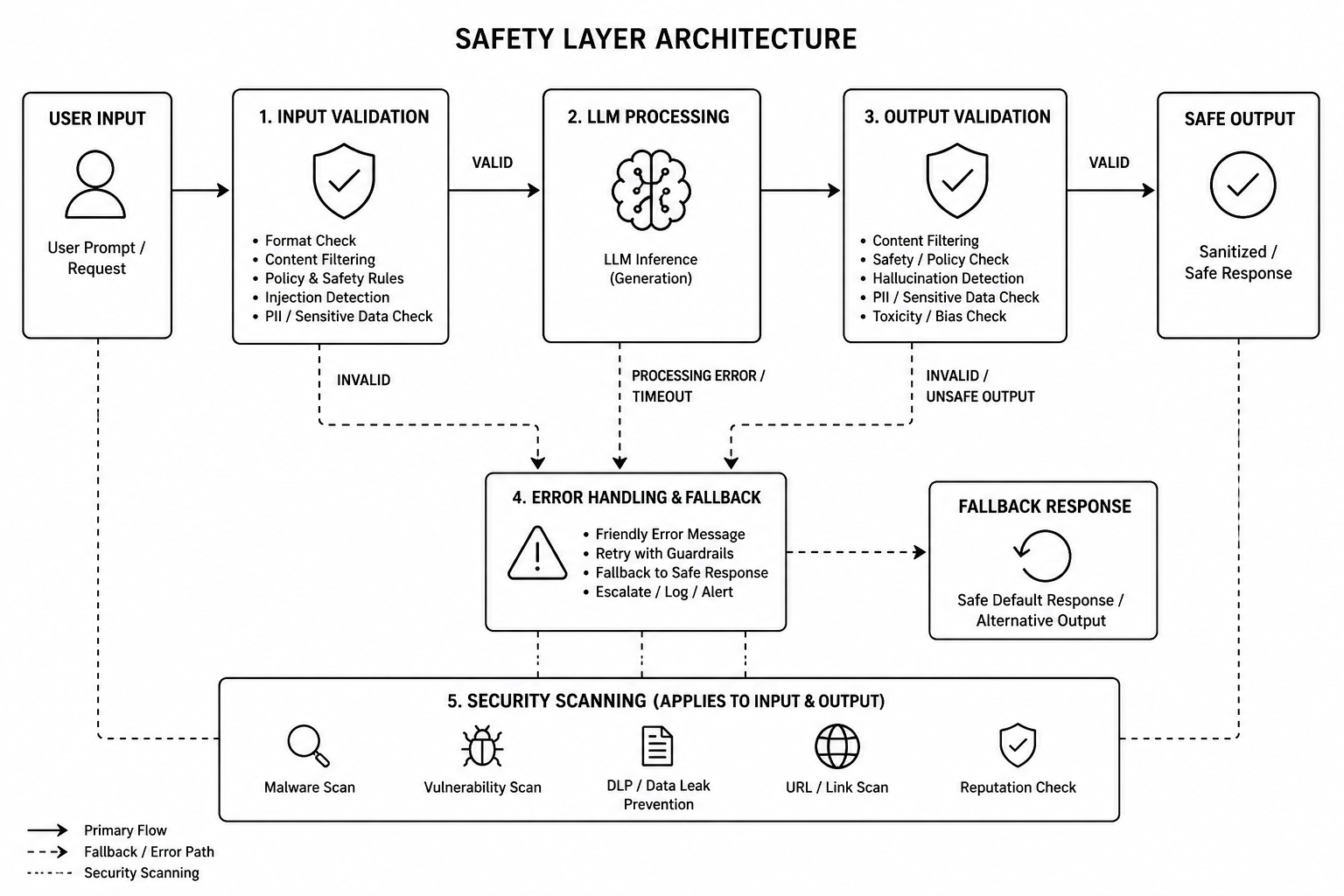
Safety Layer Architecture

Common Failures and How to Avoid Them

1. Wiring AI directly to CRM write without validation. AI hallucinates a property value, gets written to CRM, pollutes 100 records. Fix: validation layer before CRM write.2. Using wrong model for the task. Using GPT-4 (frontier, expensive) for simple classification. Using GPT-3.5 (cheaper) for complex reasoning. Fix: match model to task complexity.3. No baseline metric before automation. "Did enrichment help?" You don't know because you didn't measure before. Fix: capture baseline for 2 weeks before launching automation.4. Scaling too fast. Day 1: enrich 10 leads. Seems fine. Day 7: enrich 1,000 leads. API costs spike, quality degrades. Fix: ramp slowly, measure cost + quality at each stage.5. No contingency for AI failure. Claude API goes down. Workflow breaks. No fallback. Fix: every AI automation needs a manual override or fallback.

Want to map AI automation opportunities in your marketing stack without breaking things? Our AI automation team runs free audits. Book yours.

FAQ

What AI model should I use for marketing automation?

Start with Claude Opus for reasoning/complex tasks. Use GPT-4 for breadth. Use Claude Haiku for cost-sensitive volume work. Test multiple; don't optimize for model, optimize for task.

How much does AI marketing automation cost per month?

Tool cost (n8n, Zapier): £50–500. LLM API costs: £50–500 depending on volume. Total: £100–1,000/month for most setups. Measure cost per lead enriched or per automation and optimize.

Is AI marketing automation compliant (GDPR, CCPA)?

Depends on your implementation. If you send customer data to third-party LLMs without DPA, you're probably not compliant. Self-hosted or enterprise LLM access is safer.

Can I build this myself or do I need an agency?

If you have engineering discipline and time, DIY works. For most marketing teams, agency is faster. DIY usually takes 2–3x longer and introduces compliance/data risks.

How do I measure ROI of marketing AI automation?

Time saved per week (hours × hourly cost). Data quality improvement (lead conversion before/after enrichment). Cost per workflow vs manual equivalent. Measure baseline before launch.

Conclusion: AI Automation Requires Discipline, Not Magic

The marketing teams winning with AI automation in 2026 aren't the ones with the fanciest models. They're the ones with the best guardrails, logging, and validation. They build small, measure constantly, and scale carefully.Start with Layer 2 (AI enrichment). Add 2–3 safe workflows. Measure impact. Only then scale to Layer 3 (agents).Our AI automation specialists build safe, production-grade marketing automations. Book an audit if you want to explore opportunities without risk.

 The Marketing AI Automation Playbook — step-by-step guide to building guardrails and deploying five safe marketing workflows.

KEEP BUILDING
title arrow

You've got the plan. Let's build it.

We turn the frameworks you just read into the flows, pages, and automation behind them — under your brand, always.

Keep reading

View all articles
button arrowbutton arrow
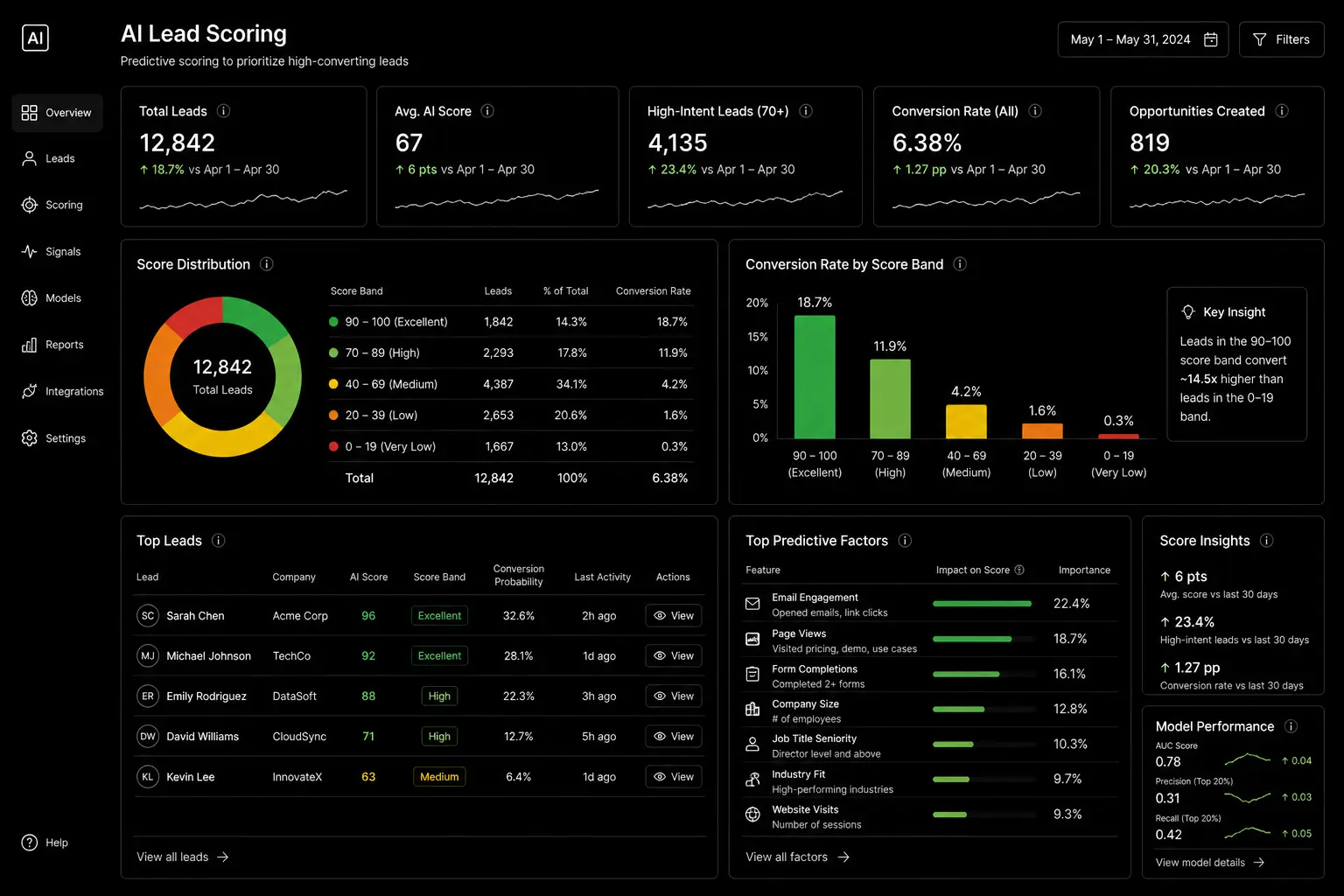
AI Lead Scoring: A Practical Implementation Guide for B2B
AI Automation

AI Lead Scoring: A Practical Implementation Guide for B2B

AI Lead Scoring in 2026 is won by execution quality, not platform hype. Teams that perform consistently align strategy, implementation, and measurement into one operating system. This guide gives the practical framework, internal link map, and optimization cadence to do that.AI lead scoring beats rules-based models when set up right. Here's the implementation that actually moves revenue. If you want implementation help, work with AI automation services. For connected strategy, also review Hubspot Marketing Automation and Website Redesign Guide. You can also align execution with HubSpot CMS team for cross-functional delivery.

What AI Lead Scoring Means in Practice

AI lead scoring improves prioritization when model quality, CRM activation, and feedback loops are managed correctly. The commercial value is faster sales focus on high-fit accounts.

Why ai lead scoring Matters in 2026

1. Rule-based scoring struggles with noisy modern funnels.2. Models surface patterns invisible to static point systems.3. Scores only matter when embedded into rep workflows.

Step-by-Step Playbook

1. Audit training data

Clean labels, dedupe records, and fill critical fields.

2. Choose practical model strategy

Start interpretable, then increase complexity only when needed.

3. Define score bands and actions

Map high/medium/low scores to clear next steps.

4. Embed in CRM operations

Push scores into routing, queues, and outreach cadences.

5. Recalibrate quarterly

Refresh thresholds as channel and buyer behavior change.Mid-article CTA -> Need support applying this to your stack? Lead scoring audit and get a scoped roadmap with timeline, owners, and KPI targets.

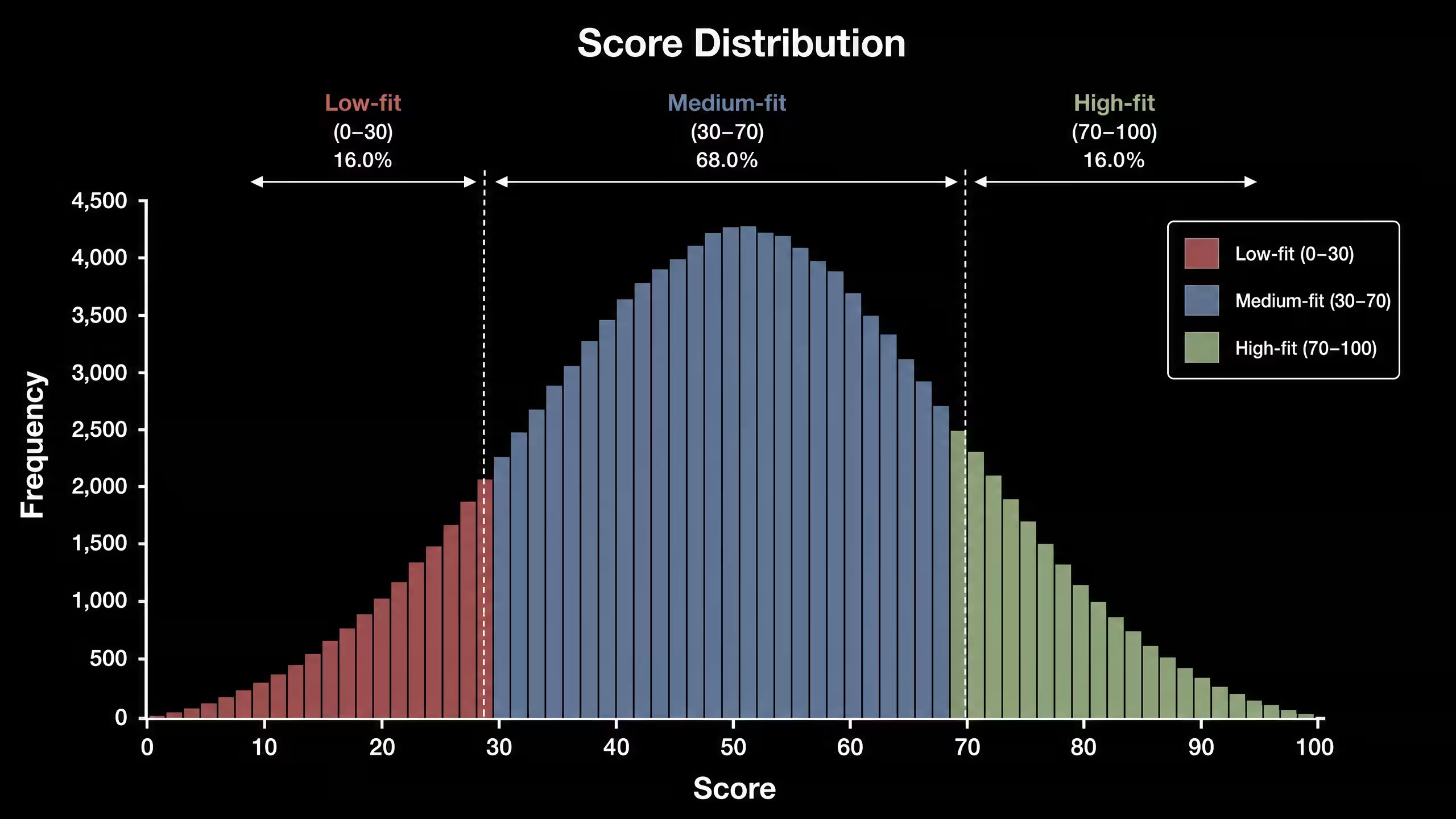
Score Distribution

Tools, References, and Benchmarks

  • Lead scoring data audit
  • Score-band action matrix
  • Quarterly recalibration checklist
  • Semantic keyword targets to distribute naturally: predictive lead scoring, ai crm scoring, lead scoring model

Use these references during planning and QA: OpenAI platform docs, Google Search docs, and Gartner research notes.

Common Mistakes That Kill Performance

  • Training on dirty data
  • No action map per score band
  • Never recalibrating thresholds

FAQ - AI Lead Scoring

How long does a ai lead scoring project usually take?

Most teams can ship an initial version in 4 to 8 weeks, then improve outcomes over one quarter with a weekly optimization cadence.

Is ai lead scoring relevant for UK and US teams?

Yes. The core framework is consistent across both markets. Differences are usually compliance details, buying behavior, and GBP/USD planning.

What should we measure first for ai lead scoring?

Track one leading metric, one conversion metric, and one revenue metric so execution stays tied to business impact.

Should we run this in-house or with a specialist partner?

If your team has deep expertise and bandwidth, in-house can work. If speed and risk control matter, working with a specialist partner is usually faster.

What is the most common failure mode?

Teams skip governance after launch. Data quality drifts, process quality declines, and performance plateaus. A simple weekly operating rhythm prevents this.

Conclusion

AI Lead Scoring performs best when execution decisions are tied to measurable outcomes from day one. Use this playbook to prioritize what matters, reduce risk, and create a repeatable optimization rhythm.Want a specialist team to accelerate delivery? Talk to AI automation services or book a consultation and we will map a practical rollout plan.Download the AI Lead Scoring Implementation Kit to implement this framework with templates and checklists.

AI Sales Agent Deployment Guide — including workflow templates, AI prompt library, escalation framework, KPI dashboard, and implementation checklists used to deploy AI SDRs successfully.

AI Lead Scoring: A Practical Implementation Guide for B2B
AI Automation

AI Lead Scoring: A Practical Implementation Guide for B2B

AI Lead Scoring in 2026 is won by execution quality, not platform hype. Teams that perform consistently align strategy, implementation, and measurement into one operating system. This guide gives the practical framework, internal link map, and optimization cadence to do that.AI lead scoring beats rules-based models when set up right. Here's the implementation that actually moves revenue. If you want implementation help, work with AI automation services. For connected strategy, also review Hubspot Marketing Automation and Website Redesign Guide. You can also align execution with HubSpot CMS team for cross-functional delivery.

What AI Lead Scoring Means in Pract

ce

AI lead scoring improves prioritization when model quality, CRM activation, and feedback loops are managed correctly. The commercial value is faster sales focus on high-fit accounts.

Why ai lead scoring Matters in 2026

1. Rule-based scoring struggles with noisy modern funnels.2. Models surface patterns invisible to static point systems.3. Scores only matter when embedded into rep workflows.

Step-by-Step Playbook

1. Audit training data

Clean labels, dedupe records, and fill critical fields.

2. Choose practical model strategy

Start interpretable, then increase complexity only when needed.

3. Define score bands and actions

Map high/medium/low scores to clear next steps.

4. Embed in CRM operations

Push scores into routing, queues, and outreach cadences.

5. Recalibrate quarterly

Refresh thresholds as channel and buyer behavior change.Mid-article CTA -> Need support applying this to your stack? Lead scoring audit and get a scoped roadmap with timeline, owners, and KPI targets.

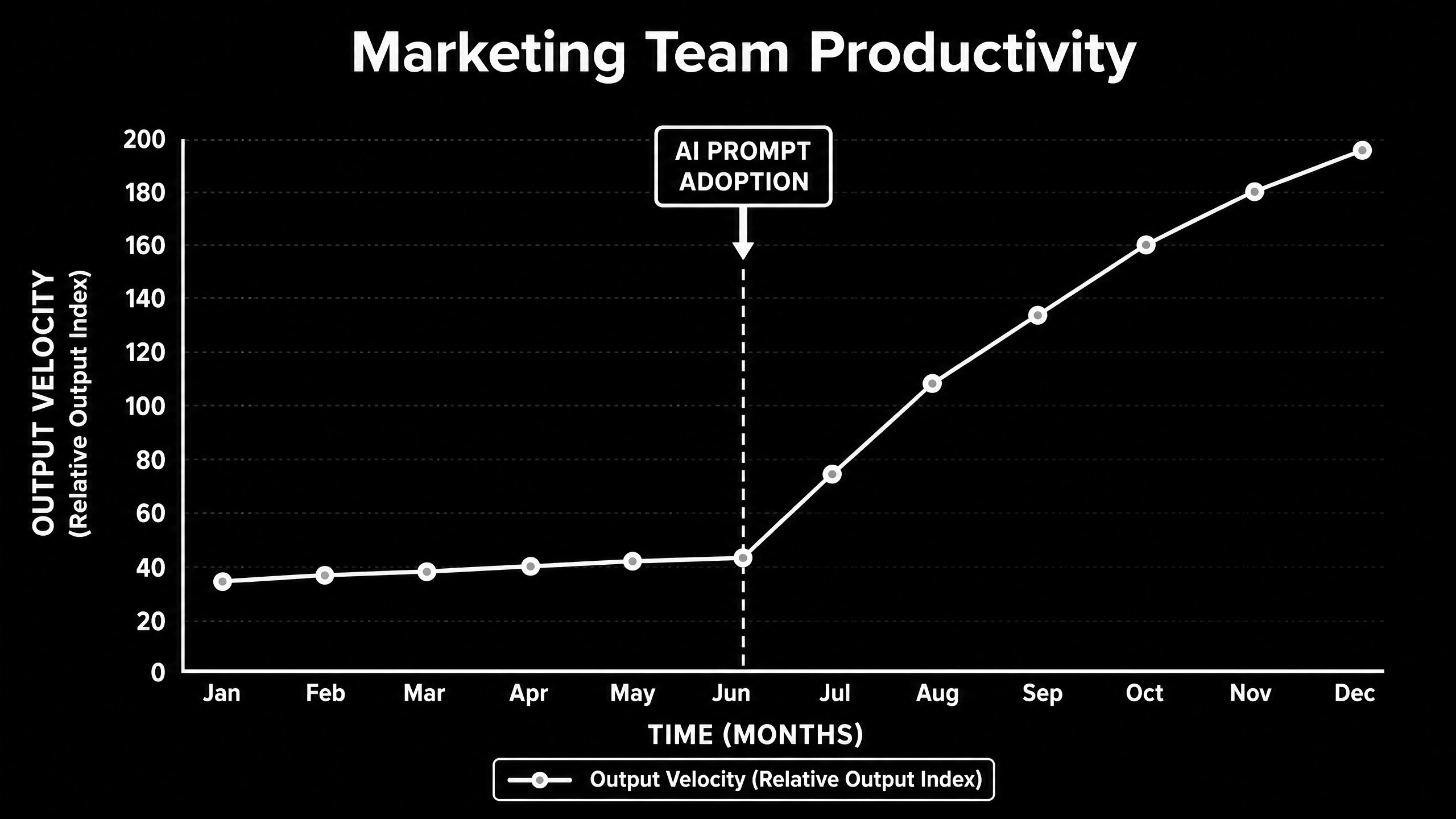
Marketing Team Productivity

Tools, References, and Benchmarks

  • Lead scoring data audit
  • Score-band action matrix
  • Quarterly recalibration checklist
  • Semantic keyword targets to distribute naturally: predictive lead scoring, ai crm scoring, lead scoring model

Use these references during planning and QA: OpenAI platform docs, Google Search docs, and Gartner research notes.

Common Mistakes That Kill Performance

  • Training on dirty data
  • No action map per score band
  • Never recalibrating thresholds

FAQ - AI Lead Scoring

How long does a ai lead scoring project usually take?

Most teams can ship an initial version in 4 to 8 weeks, then improve outcomes over one quarter with a weekly optimization cadence.

Is ai lead scoring relevant for UK and US teams?

Yes. The core framework is consistent across both markets. Differences are usually compliance details, buying behavior, and GBP/USD planning.

What should we measure first for ai lead scoring?

Track one leading metric, one conversion metric, and one revenue metric so execution stays tied to business impact.

Should we run this in-house or with a specialist partner?

If your team has deep expertise and bandwidth, in-house can work. If speed and risk control matter, working with a specialist partner is usually faster.

What is the most common failure mode?

Teams skip governance after launch. Data quality drifts, process quality declines, and performance plateaus. A simple weekly operating rhythm prevents this.

Conclusion

AI Lead Scoring performs best when execution decisions are tied to measurable outcomes from day one. Use this playbook to prioritize what matters, reduce risk, and create a repeatable optimization rhythm.Want a specialist team to accelerate delivery? Talk to AI automation services or book a consultation and we will map a practical rollout plan.Download the AI Lead Scoring Implementation Kit to implement this framework with templates and checklists.

AI Lead Scoring Implementation Kit — CRM audit templates, predictive scoring framework, score-band action matrix, workflow blueprints, KPI dashboards, and implementation checklists for high-performing B2B sales teams.

AI Chatbot for Ecommerce: Which One and How to Deploy It in 2026
AI Automation

AI Chatbot for Ecommerce: Which One and How to Deploy It in 2026

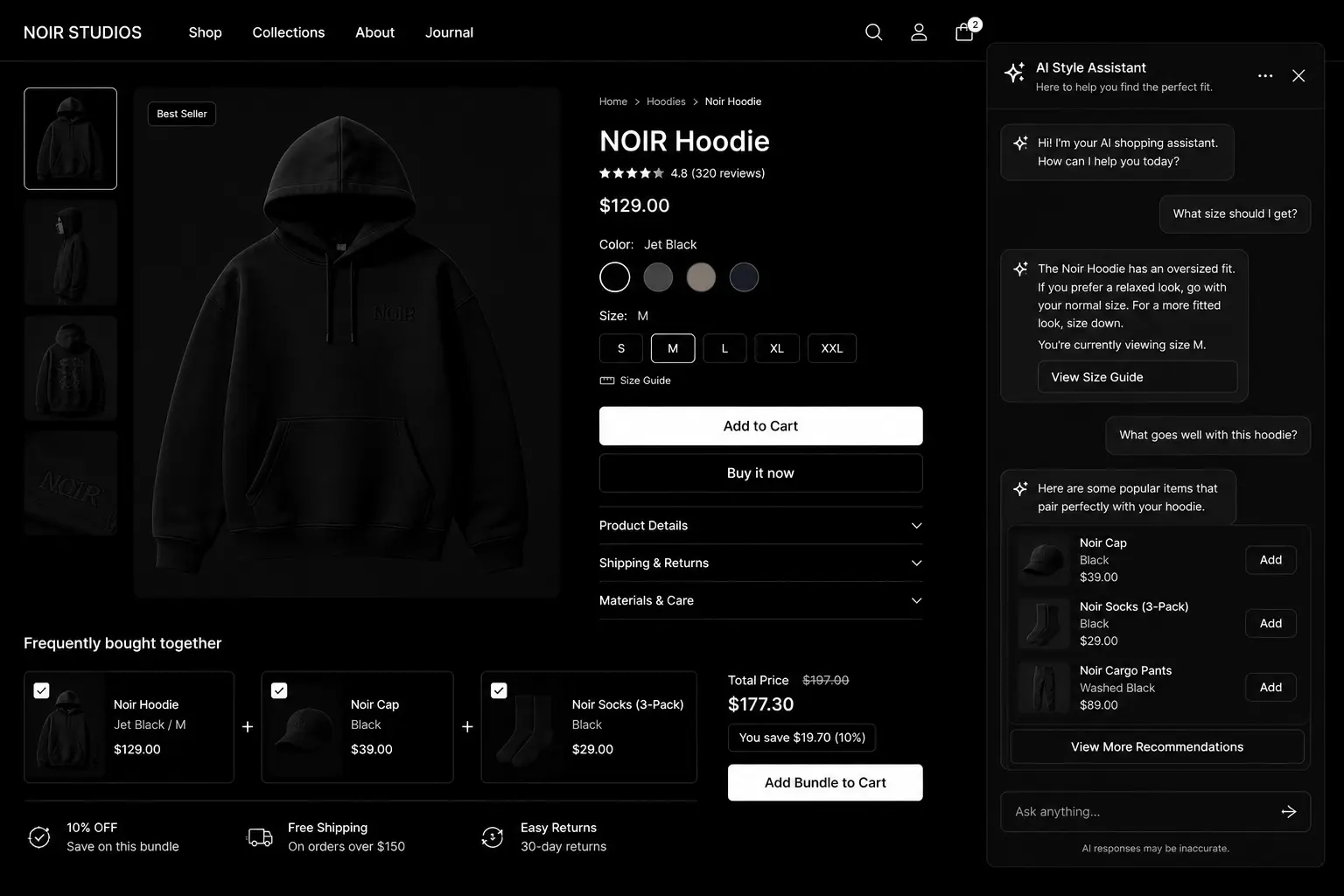
AI Chatbot for Ecommerce in 2026 is won by execution quality, not platform hype. Teams that perform consistently align strategy, implementation, and measurement into one operating system. This guide gives the practical framework, internal link map, and optimization cadence to do that.AI chatbots finally lift ecommerce conversion not just deflect tickets. Here's the 2026 stack and deployment plan. If you want implementation help, work with our AI automation team. For connected strategy, also review AI Automation for Business and Website Redesign Guide. You can also align execution with Shopify development for cross-functional delivery.

What AI Chatbot for Ecommerce Means in Practice

An AI chatbot for ecommerce should improve conversion, AOV, and customer confidence - not only reduce support tickets. High-performing deployments are intent-aware and deeply integrated with catalog and order data.

Why ai chatbot for ecommerce Matters in 2026

1. Modern bots influence product discovery and purchase confidence.2. Shopify integrations improve answer quality and speed.3. Customers now expect instant contextual help.

Step-by-Step Playbook

1. Pick one conversion-first use case

Start with sizing help, recommendations, or checkout support.

2. Connect product and order context

Integrate catalog and order data for accurate answers.

3. Set fallback escalation paths

Route complex or sensitive issues to human support quickly.

4. Deploy on high-intent pages

Prioritize PDP, cart, and checkout-adjacent surfaces.

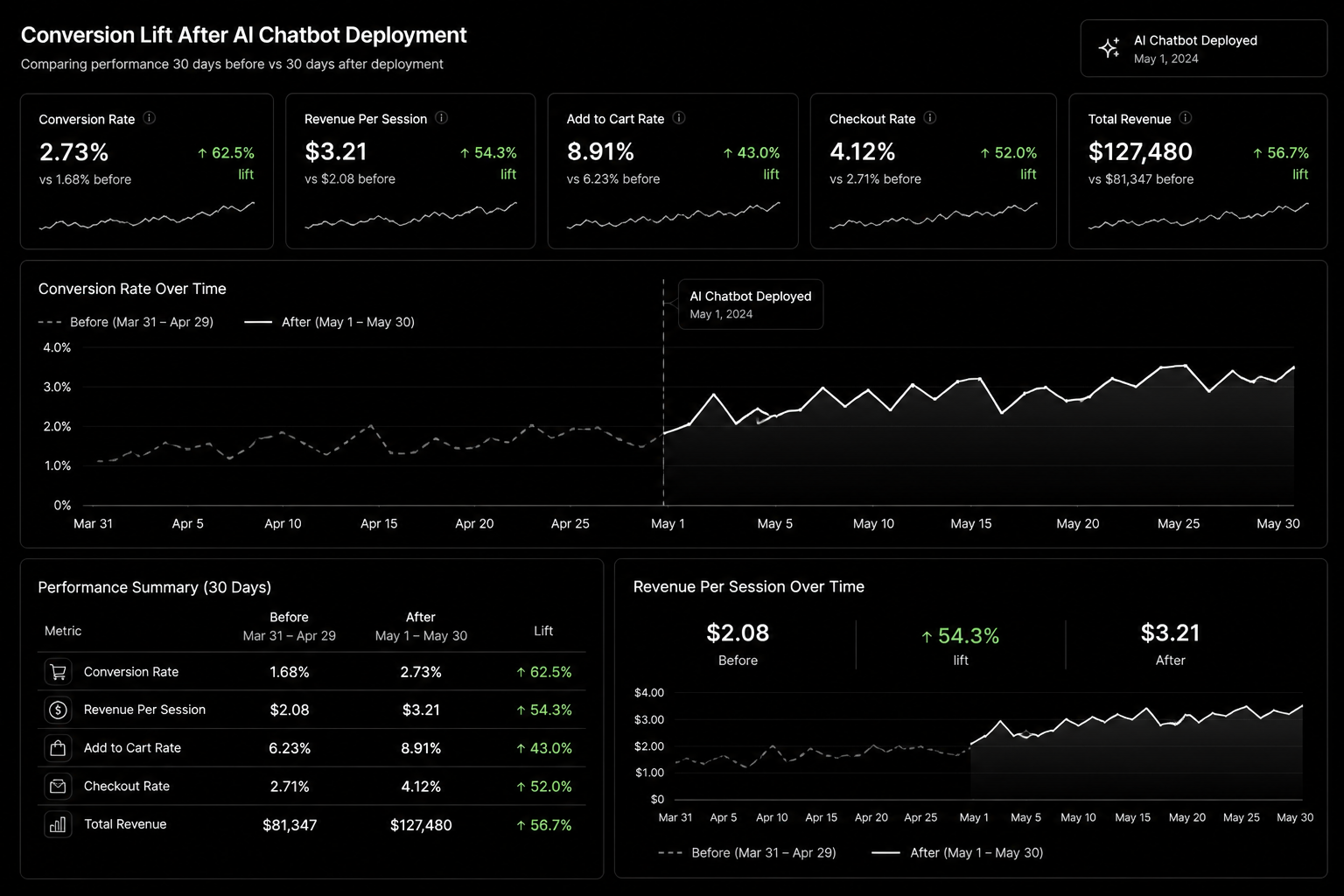
5. Measure revenue impact

Track conversion, AOV, and CSAT before and after launch.Mid-article CTA -> Need support applying this to your stack? AI chatbot scoping and get a scoped roadmap with timeline, owners, and KPI targets.

Conversion Lift AI Chatboat Development

Tools, References, and Benchmarks

  • Chatbot intent taxonomy
  • Support escalation matrix
  • Revenue impact dashboard
  • Semantic keyword targets to distribute naturally: ai chatbot shopify, best ai chatbot ecommerce, ai customer support ecommerce

Use these references during planning and QA: OpenAI platform docs, Google Search docs, and Gartner research notes.

Common Mistakes That Kill Performance

  • Deploying everywhere on day one
  • No human handoff logic
  • Tracking deflection only

FAQ - AI Chatbot for Ecommerce

How long does a ai chatbot for ecommerce project usually take?

Most teams can ship an initial version in 4 to 8 weeks, then improve outcomes over one quarter with a weekly optimization cadence.

Is ai chatbot for ecommerce relevant for UK and US teams?

Yes. The core framework is consistent across both markets. Differences are usually compliance details, buying behavior, and GBP/USD planning.

What should we measure first for ai chatbot for ecommerce?

Track one leading metric, one conversion metric, and one revenue metric so execution stays tied to business impact.

Should we run this in-house or with a specialist partner?

If your team has deep expertise and bandwidth, in-house can work. If speed and risk control matter, working with a specialist partner is usually faster.

What is the most common failure mode?

Teams skip governance after launch. Data quality drifts, process quality declines, and performance plateaus. A simple weekly operating rhythm prevents this.

Conclusion

AI Chatbot for Ecommerce performs best when execution decisions are tied to measurable outcomes from day one. Use this playbook to prioritize what matters, reduce risk, and create a repeatable optimization rhythm.Want a specialist team to accelerate delivery? Talk to our AI automation team or book a consultation and we will map a practical rollout plan.Download the Ecommerce AI Chatbot Selection Guide to implement this framework with templates and checklists.

Ecommerce AI Chatbot Selection Guide — compare leading AI chatbots, deployment checklists, integration templates, and ROI calculators.