


Inbound Logo
Web Development
Resources
Free audit
Free HubSpot Portal Audit
Get an instant audit of your HubSpot portal with actionable insights to improve CRM setup, automation, marketing, and overall performance.
Start Free Audit
button arrowbutton arrow
Shopify

Shopify vs WooCommerce vs BigCommerce: Honest 2026 Comparison

time
12 MIN
date
February 2, 2026
Shopify vs WooCommerce vs BigCommerce: Honest 2026 Comparison
In this article

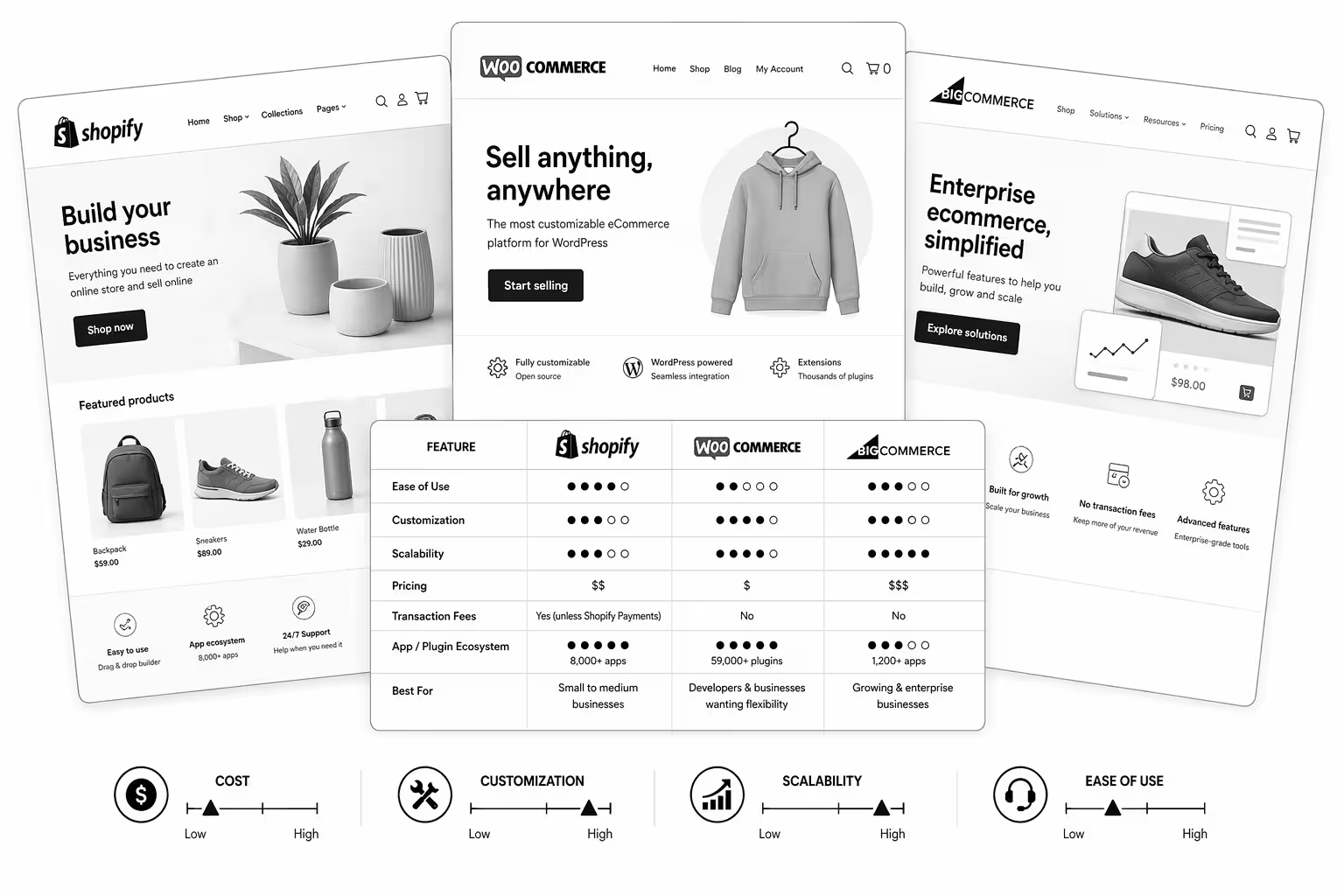
If you're choosing an ecommerce platform in 2026, the wrong decision can cost you more than a redesign. It can slow launches, break checkout performance, and create months of technical debt right when your acquisition costs are rising.This comparison covers Shopify vs WooCommerce vs BigCommerce from an operator perspective: total cost, growth-stage fit, customisation, and what each platform feels like to run at £1M, £10M, and £50M+ revenue.

Quick Verdict by Business Type

  • Shopify wins for most fast-scaling DTC brands that need speed, reliability, and app ecosystem depth.
  • WooCommerce fits teams needing deep WordPress-level control and willing to own infrastructure complexity.
  • BigCommerce works well for catalogue-heavy or B2B-oriented teams needing strong native enterprise features.

If you're in doubt, default to operational simplicity. The platform your team can run well every week beats the platform with the longest feature page.

Shopify: Best for Speed and Predictability

Shopify is the default recommendation for most growth ecommerce teams because it reduces technical overhead. Hosting, checkout reliability, and app integrations are mature, and launch velocity is usually faster than alternatives.For brands heading into Plus territory, the strategic path is usually clear: build stable foundations now, then scale with structured Shopify Plus development as complexity grows.

WooCommerce: Maximum Flexibility, Maximum Responsibility

WooCommerce offers extensive control because it sits on WordPress. That freedom is useful for custom requirements, but it also means your team owns hosting quality, plugin compatibility, security updates, and performance governance.WooCommerce can absolutely scale. It just requires disciplined technical ownership. Many brands underestimate this and only discover the maintenance burden during peak season.

BigCommerce: Strong Mid-Market and B2B Option

BigCommerce is often under-considered. It offers strong native capabilities for complex catalogues, multi-store needs, and B2B scenarios without as much dependency on paid apps as Shopify in some cases.Its main challenge is ecosystem momentum: Shopify's partner and app ecosystem still tends to move faster. For many teams, ecosystem velocity matters as much as feature parity.

Total Cost of Ownership by 36 Months

Shopify has clearer recurring costs and faster implementation for most teams. WooCommerce appears cheaper early but can become expensive once you account for managed hosting, security tooling, performance optimisation, plugin subscriptions, and developer time. BigCommerce sits between the two depending on plan and integration stack.The question is not which monthly plan is cheapest. It is which platform delivers the best margin after operating overhead.

Need help choosing before committing to a rebuild? Our team maps platform fit by catalogue complexity, growth goals, and operations model. Book ecommerce platform advice.

SEO and Conversion Performance

All three platforms can rank and convert well. Outcomes depend on implementation quality, page speed discipline, and product page architecture. Shopify generally makes baseline performance easier. WooCommerce allows deep customisation but can degrade fast with plugin sprawl. BigCommerce is stable but may require more custom work for highly specific content workflows.Regardless of platform, conversion growth requires structured experimentation. Use this with our CRO playbook once your build is live.

Which Platform Should You Pick in 2026?

  • Pick Shopify if your priority is fast scaling with low operational friction.
  • Pick WooCommerce if you truly need WordPress-level backend control and have technical depth.
  • Pick BigCommerce if you need stronger native B2B/catalogue features and your team is comfortable with a smaller ecosystem.

If you are planning to hire external support either way, choose the platform your long-term partner is strongest at and can support consistently.

FAQ

Is Shopify better than WooCommerce in 2026?

For most scaling DTC brands, yes, because of speed and lower maintenance burden. WooCommerce is still excellent where custom control is the top requirement.

Is BigCommerce better for B2B ecommerce?

It can be. BigCommerce has strong native B2B capabilities that reduce reliance on paid apps for some enterprise use cases.

Which platform is cheapest long-term?

It depends on team structure. WooCommerce can be cheap with strong in-house capability. For many teams, Shopify has lower total operational cost despite higher visible subscription spend.

Can I migrate later if I choose wrong?

Yes, but migrations are expensive and risky. It is better to choose based on 3-year operating reality now than plan to migrate in 12 months.

Should I go straight to Shopify Plus?

If you have complex checkout needs, B2B/wholesale requirements, or revenue scale that justifies it, yes. Otherwise start on Shopify with a Plus-ready architecture.

Conclusion: Optimise for Operating Speed, Not Platform Hype

The best choice in Shopify vs WooCommerce vs BigCommerce is the one your team can execute on consistently under growth pressure. In 2026, that usually means Shopify for most brands, WooCommerce for high-control technical teams, and BigCommerce for specific catalogue/B2B profiles.Make the decision on operating model and total cost, not feature-list theatre.If you want a practical second opinion before you lock in, our Shopify development team can help pressure-test your options. Book a consultation.

 The Ecommerce Platform Selection Guide — a scoring worksheet for platform fit by complexity, margin goals, and team capability.

KEEP BUILDING
title arrow

You've got the plan. Let's build it.

We turn the frameworks you just read into the flows, pages, and automation behind them — under your brand, always.

Keep reading

View all articles
button arrowbutton arrow
Shopify Plus Migration: Moving From Standard Without Breaking Revenue
Shopify

Shopify Plus Migration: Moving From Standard Without Breaking Revenue

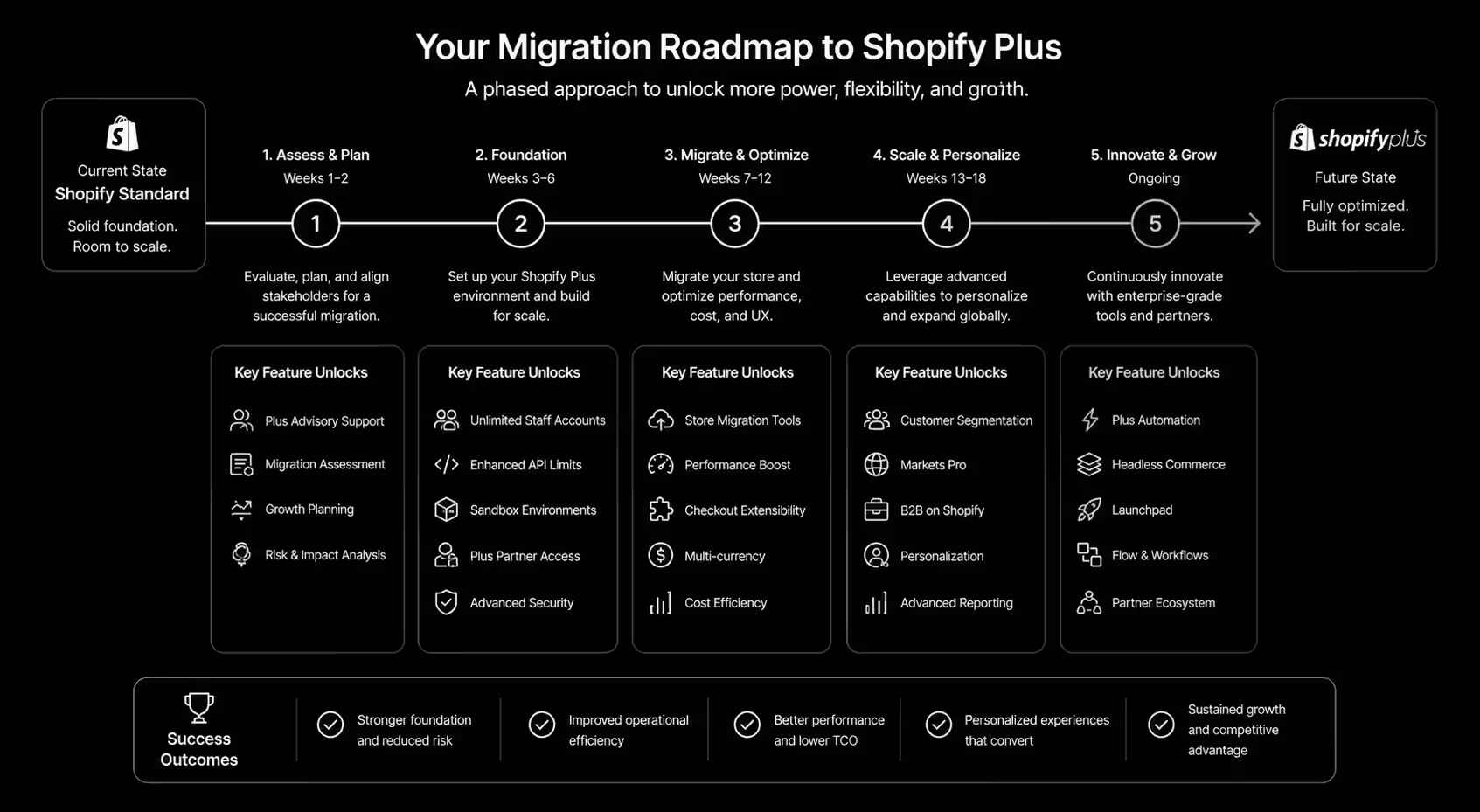
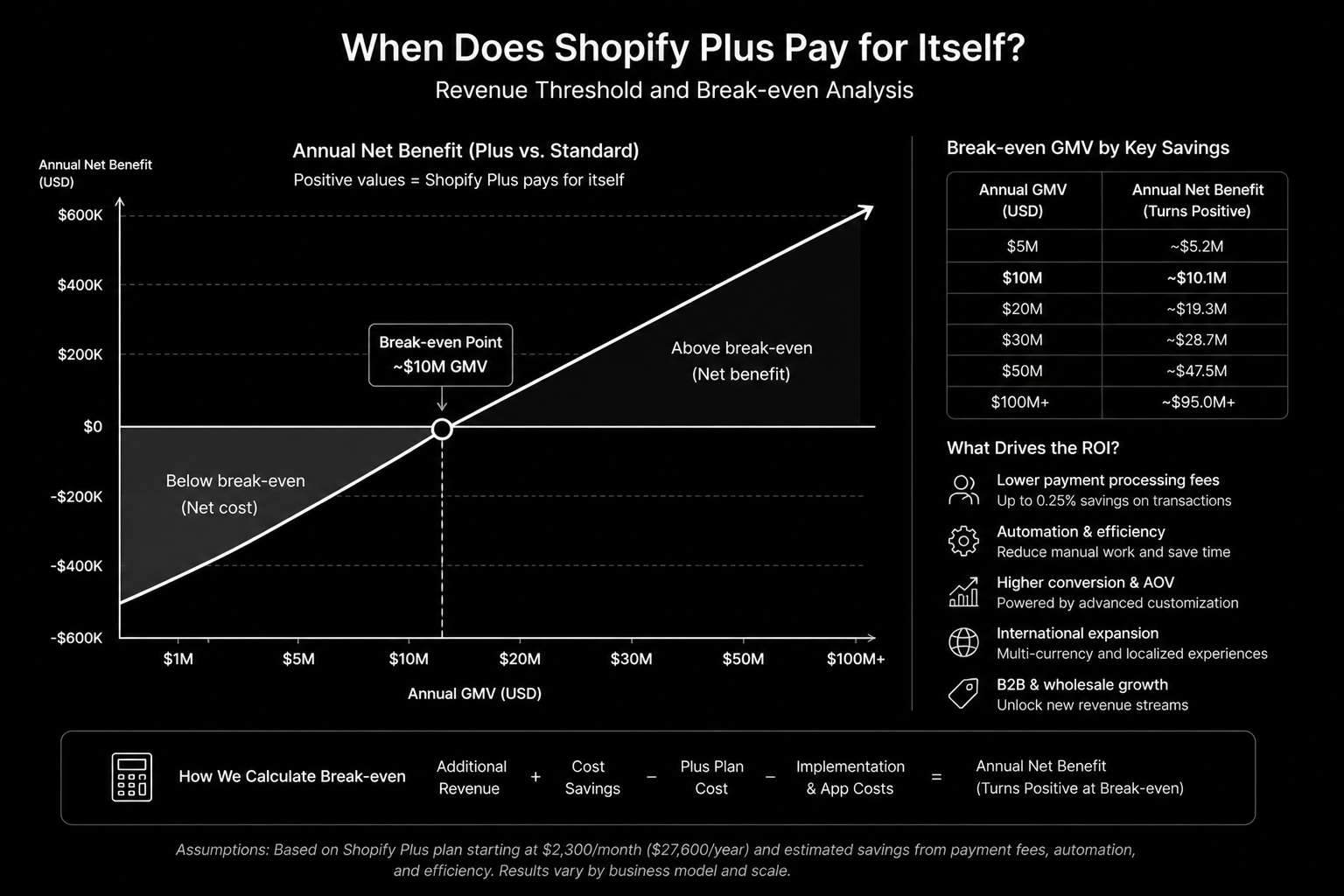
Shopify Plus Migration in 2026 is won by execution quality, not platform hype. Teams that perform consistently align strategy, implementation, and measurement into one operating system. This guide gives the practical framework, internal link map, and optimization cadence to do that.Most Shopify-to-Plus migrations are scheduled six months too late. Here's the upgrade trigger and migration plan. If you want implementation help, work with Shopify development. For connected strategy, also review Shopify Plus Development Guide and Shopify Hydrogen.

What Shopify Plus Migration Means in Practice

Shopify Plus migration should be triggered by operational complexity and growth needs, not prestige. The safest migrations are phased, risk-mapped, and built around conversion protection.

Why shopify plus migration Matters in 2026

1. Late upgrades often cause avoidable revenue risk.2. Plus unlocks only matter if workflows are designed around them.3. Migration outcomes depend more on sequencing and QA than platform labels.

Step-by-Step Playbook

1. Confirm readiness triggers

Validate GMV, complexity, and roadmap requirements.

2. Scope migration streams

Separate storefront, checkout, automation, and ops dependencies.

3. Build rollback plan

Define fallback routes and launch gates before cutover.

4. Re-platform critical automation

Rebuild scripts and flows using Plus-compatible methods.

5. Run hypercare monitoring

Track conversion and order integrity post-launch.Mid-article CTA -> Need support applying this to your stack? Plus upgrade audit and get a scoped roadmap with timeline, owners, and KPI targets.

shopify plus

Tools, References, and Benchmarks

  • Plus readiness checklist
  • Migration risk register
  • Hypercare dashboard
  • Semantic keyword targets to distribute naturally: shopify to shopify plus, when to upgrade to shopify plus, shopify plus upgrade

Use these references during planning and QA: Shopify developer docs, Shopify Help Center, and web.dev performance guidance.

Common Mistakes That Kill Performance

  • Migrating too late
  • No rollback path
  • Understaffed launch support

FAQ - Shopify Plus Migration

How long does a shopify plus migration project usually take?

Most teams can ship an initial version in 4 to 8 weeks, then improve outcomes over one quarter with a weekly optimization cadence.

Is shopify plus migration relevant for UK and US teams?

Yes. The core framework is consistent across both markets. Differences are usually compliance details, buying behavior, and GBP/USD planning.

What should we measure first for shopify plus migration?

Track one leading metric, one conversion metric, and one revenue metric so execution stays tied to business impact.

Should we run this in-house or with a specialist partner?

If your team has deep expertise and bandwidth, in-house can work. If speed and risk control matter, working with a specialist partner is usually faster.

What is the most common failure mode?

Teams skip governance after launch. Data quality drifts, process quality declines, and performance plateaus. A simple weekly operating rhythm prevents this.

Conclusion

Shopify Plus Migration performs best when execution decisions are tied to measurable outcomes from day one. Use this playbook to prioritize what matters, reduce risk, and create a repeatable optimization rhythm.Want a specialist team to accelerate delivery? Talk to Shopify development or book a consultation and we will map a practical rollout plan.Download the Shopify Plus Upgrade Readiness Checklist to implement this framework with templates and checklists.

Shopify Plus Migration Toolkit — migration planning checklist, revenue protection framework, data migration worksheet, app compatibility audit, SEO preservation checklist, launch readiness checklist, and 90-day post-migration roadmap to move from Shopify Standard to Shopify Plus without disrupting growth.

Shopify Checkout Extensibility: What's Possible in 2026
Shopify

Shopify Checkout Extensibility: What's Possible in 2026

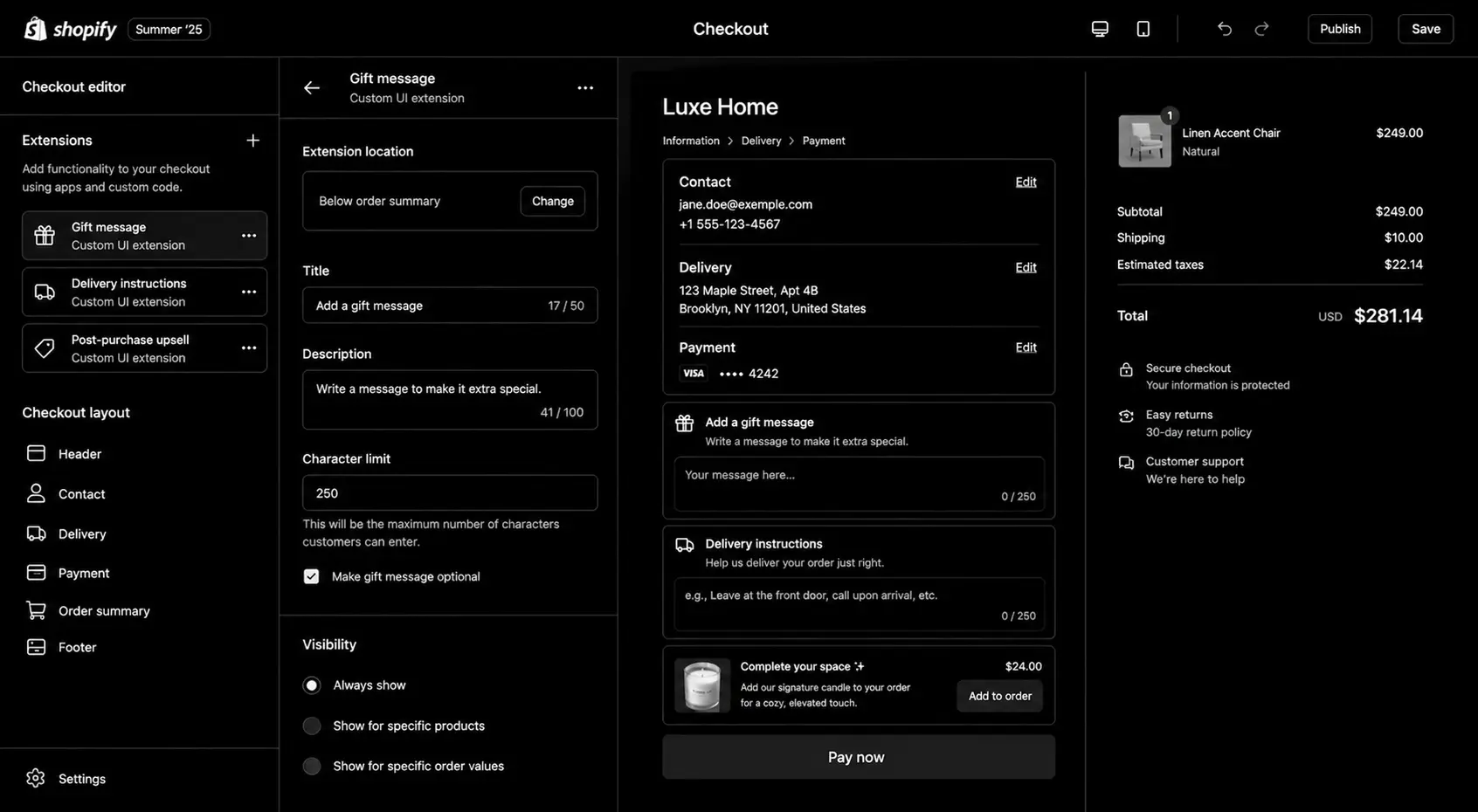
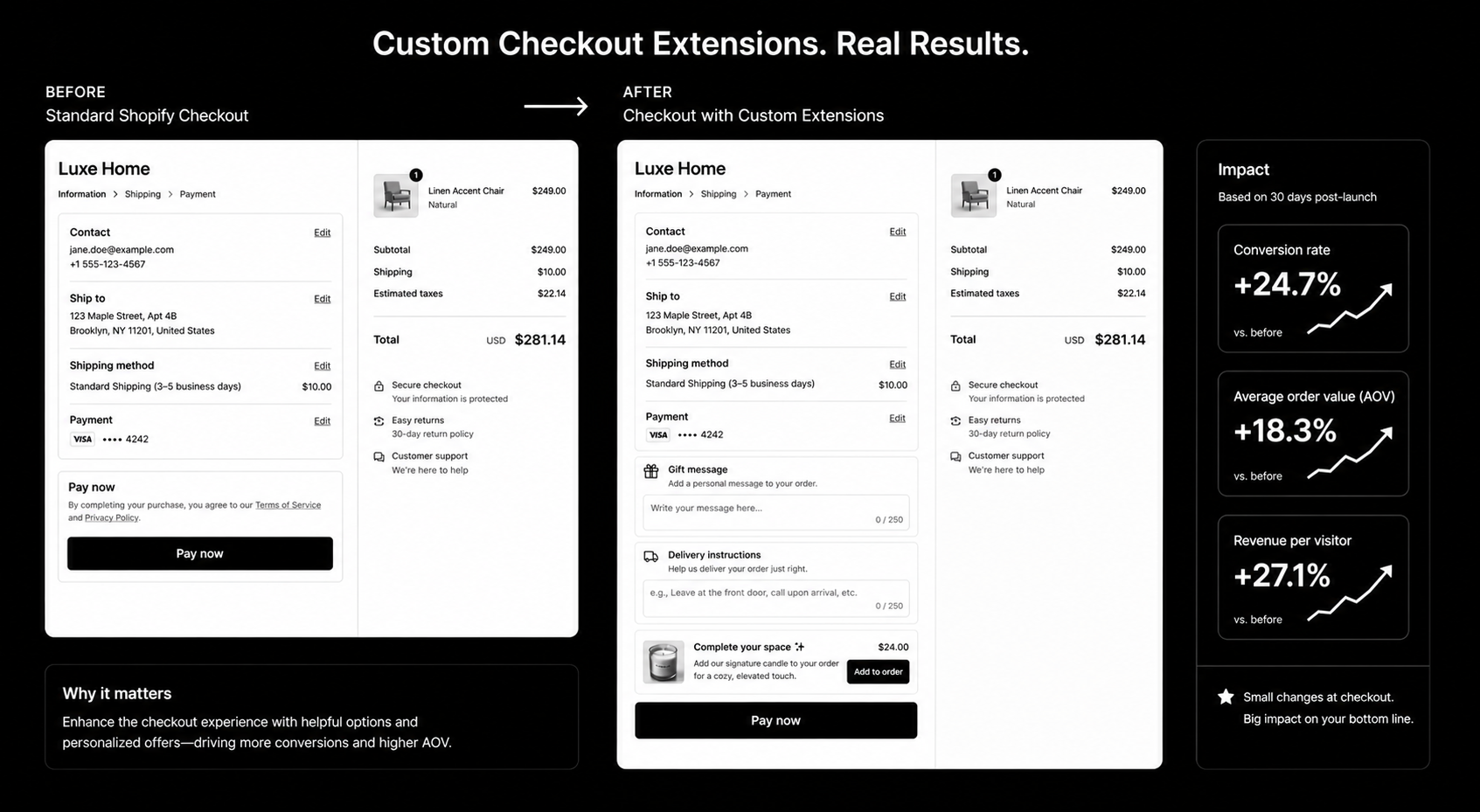
Shopify Checkout Extensibility in 2026 is won by execution quality, not platform hype. Teams that perform consistently align strategy, implementation, and measurement into one operating system. This guide gives the practical framework, internal link map, and optimization cadence to do that.Shopify checkout used to be off-limits. The 2026 extensibility model changes that — here's what's actually possible. If you want implementation help, work with our Shopify developers. For connected strategy, also review Shopify Plus Development Guide and Shopify Conversion Rate Optimization.

What Shopify Checkout Extensibility Means in Practice

Shopify checkout extensibility enables safer checkout customization through Functions and UI extensions. The goal is conversion clarity and trust, not visual complexity.

Why shopify checkout extensibility Matters in 2026

1. Checkout remains a high-leverage conversion surface.2. Extensions are safer than legacy script hacks.3. Testable customization now makes iteration faster.

Step-by-Step Playbook

1. Audit checkout friction

Use analytics and recordings to find hesitation points.

2. Prioritize high-impact extensions

Start with delivery clarity and trust-building interactions.

3. Implement deterministic logic

Use Functions with clear rule boundaries.

4. Run controlled tests

Validate each change with conversion measurement.

5. Standardize QA

Test edge cases by device, discount, and payment state.Mid-article CTA -> Need support applying this to your stack? Checkout audit and get a scoped roadmap with timeline, owners, and KPI targets.

custon checkout

Tools, References, and Benchmarks

  • Checkout extension test matrix
  • Function QA checklist
  • Checkout experiment scorecard
  • Semantic keyword targets to distribute naturally: shopify checkout extensions, shopify functions, shopify checkout customization 2026

Use these references during planning and QA: Shopify developer docs, Shopify Help Center, and web.dev performance guidance.

Common Mistakes That Kill Performance

  • Adding clutter to checkout
  • No experiment controls
  • Skipping regression tests

FAQ - Shopify Checkout Extensibility

How long does a shopify checkout extensibility project usually take?

Most teams can ship an initial version in 4 to 8 weeks, then improve outcomes over one quarter with a weekly optimization cadence.

Is shopify checkout extensibility relevant for UK and US teams?

Yes. The core framework is consistent across both markets. Differences are usually compliance details, buying behavior, and GBP/USD planning.

What should we measure first for shopify checkout extensibility?

Track one leading metric, one conversion metric, and one revenue metric so execution stays tied to business impact.

Should we run this in-house or with a specialist partner?

If your team has deep expertise and bandwidth, in-house can work. If speed and risk control matter, working with a specialist partner is usually faster.

What is the most common failure mode?

Teams skip governance after launch. Data quality drifts, process quality declines, and performance plateaus. A simple weekly operating rhythm prevents this.

Conclusion

Shopify Checkout Extensibility performs best when execution decisions are tied to measurable outcomes from day one. Use this playbook to prioritize what matters, reduce risk, and create a repeatable optimization rhythm.Want a specialist team to accelerate delivery? Talk to our Shopify developers or book a consultation and we will map a practical rollout plan.Download the Shopify Checkout Extensions Map to implement this framework with templates and checklists.

Shopify Checkout Extensibility Toolkit — checkout customization checklist, extension planning worksheet, upgrade readiness assessment, checkout UX optimization guide, app compatibility checklist, testing framework, and launch roadmap to build a faster, more flexible Shopify checkout experience.

Shopify B2B Wholesale Store Setup: Complete 2026 Guide
Shopify

Shopify B2B Wholesale Store Setup: Complete 2026 Guide

Shopify B2B Wholesale Store Setup in 2026 is won by execution quality, not platform hype. Teams that perform consistently align strategy, implementation, and measurement into one operating system. This guide gives the practical framework, internal link map, and optimization cadence to do that.Shopify's native B2B features finally make wholesale viable without third-party apps. Here's the modern setup. If you want implementation help, work with Shopify Plus team. For connected strategy, also review Shopify Plus Development Guide and How to Hire Shopify Developer. You can also align execution with get a custom quote for cross-functional delivery.

What Shopify B2B Wholesale Store Setup Means in Practice

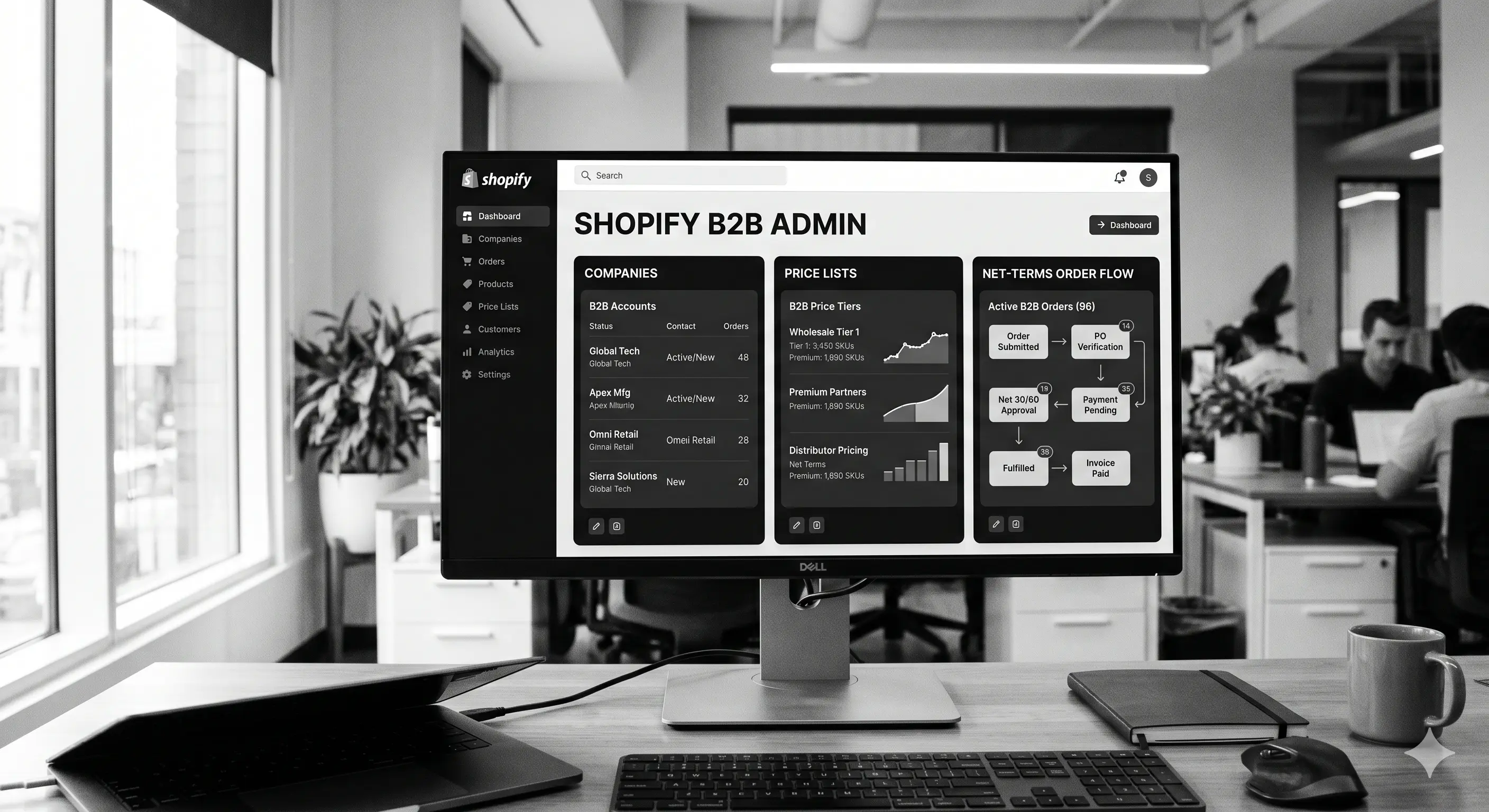
Shopify B2B wholesale is now a viable native setup with company accounts, price lists, and payment terms. Execution quality depends on account hierarchy, pricing governance, and operational handoff design.

Why shopify b2b wholesale Matters in 2026

1. Native B2B reduces app-stack fragility.2. Wholesale buyers expect self-service account logic.3. Margin pressure makes pricing controls and automation essential.

Step-by-Step Playbook

1. Design account hierarchy

Map parent accounts, locations, buyers, and permissions.

2. Build pricing logic

Define price lists, terms, and discount rules by segment.

3. Configure gated catalog

Control SKU visibility by buyer type.

4. Automate order handoffs

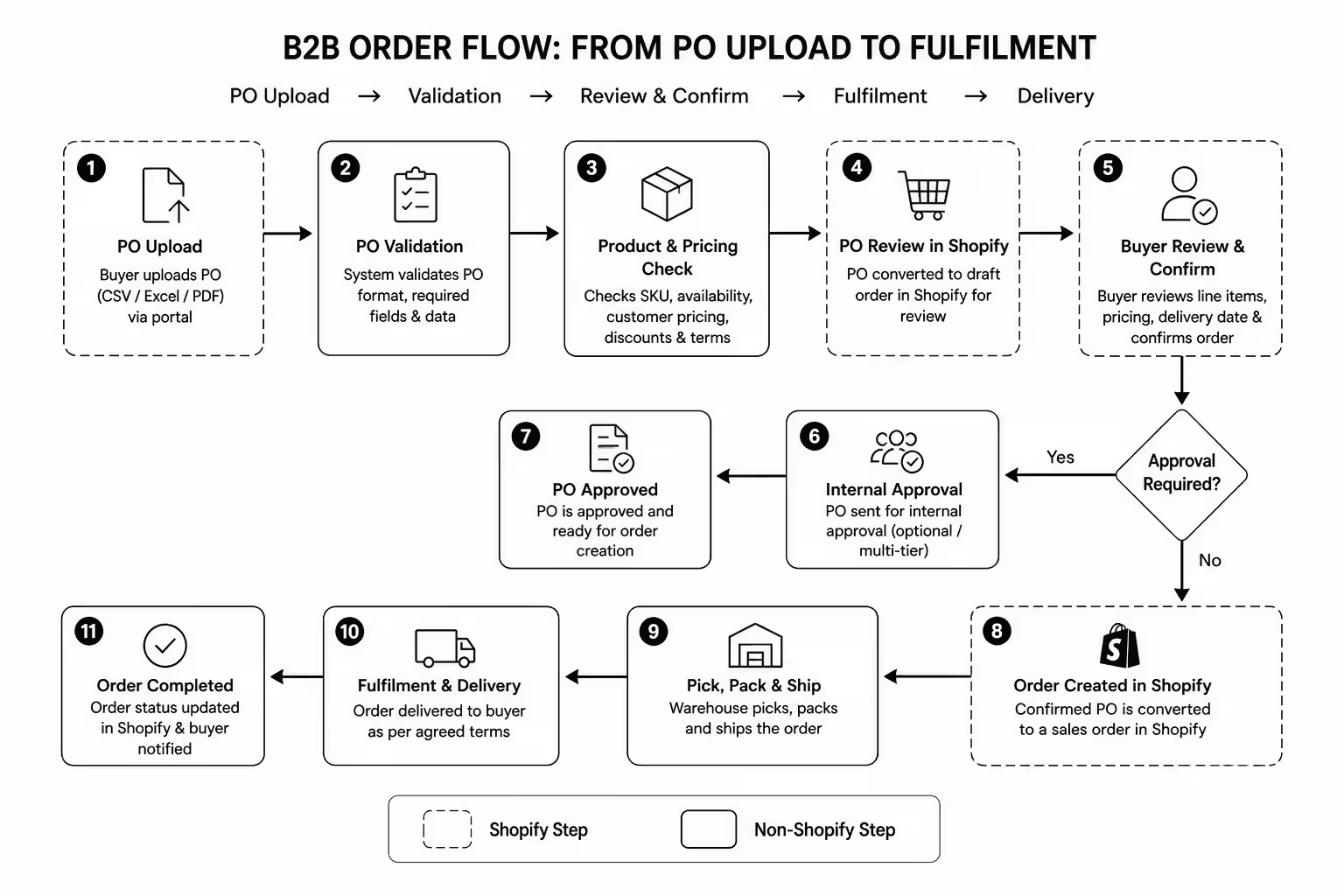
Connect PO and order states to ERP and support systems.

5. Train internal teams

Document account management and exception workflows.Mid-article CTA -> Need support applying this to your stack? Shopify B2B build call and get a scoped roadmap with timeline, owners, and KPI targets.

Train internal teams

Tools, References, and Benchmarks

  • B2B account blueprint
  • Pricing governance matrix
  • Wholesale operations SOP
  • Semantic keyword targets to distribute naturally: shopify b2b features, shopify wholesale channel, b2b ecommerce shopify

Use these references during planning and QA: Shopify developer docs, Shopify Help Center, and web.dev performance guidance.

Common Mistakes That Kill Performance

  • Flat account model
  • Price-list sprawl
  • No ERP validation path

FAQ - Shopify B2B Wholesale Store Setup

How long does a shopify b2b wholesale project usually take?

Most teams can ship an initial version in 4 to 8 weeks, then improve outcomes over one quarter with a weekly optimization cadence.

Is shopify b2b wholesale relevant for UK and US teams?

Yes. The core framework is consistent across both markets. Differences are usually compliance details, buying behavior, and GBP/USD planning.

What should we measure first for shopify b2b wholesale?

Track one leading metric, one conversion metric, and one revenue metric so execution stays tied to business impact.

Should we run this in-house or with a specialist partner?

If your team has deep expertise and bandwidth, in-house can work. If speed and risk control matter, working with a specialist partner is usually faster.

What is the most common failure mode?

Teams skip governance after launch. Data quality drifts, process quality declines, and performance plateaus. A simple weekly operating rhythm prevents this.

Conclusion

Shopify B2B Wholesale Store Setup performs best when execution decisions are tied to measurable outcomes from day one. Use this playbook to prioritize what matters, reduce risk, and create a repeatable optimization rhythm.Want a specialist team to accelerate delivery? Talk to Shopify Plus team or book a consultation and we will map a practical rollout plan.Download the Shopify B2B Setup Workbook to implement this framework with templates and checklists.

Shopify B2B Wholesale Store Setup Toolkit — B2B requirements checklist, wholesale pricing framework, customer segmentation planner, Shopify B2B configuration guide, order workflow template, sales team handoff checklist, and launch roadmap to build a scalable wholesale ecommerce operation.